Key Takeaways
Defining Contextual Comments and Core Concepts
Contextual comments represent a sophisticated communication strategy where remarks are strategically crafted to align precisely with the specific environment, conversation, and underlying social dynamics. Unlike generic interactions, these comments demonstrate deep understanding and nuanced engagement.
Drawing from discourse analysis frameworks, contextual comments are understood as dynamic interactions that constitute discourse through interactional achievement. They operate on three critical dimensions:
- Interactional Achievement: Comments that adapt in real-time to conversational cues
- Metapragmatic Awareness: Understanding social norms and communication contexts
- Historicity: Referencing shared histories and ongoing conversational narratives
Key characteristics of effective contextual comments include:
- Relevance to current discussion
- Demonstrable understanding of conversation context
- Organic contribution to dialogue
- Respect for existing communication norms
Contextual factors fundamentally shape message interpretation across various communication environments. Emerging research highlights how contextual elements influence interaction, emphasizing that meaningful engagement transcends surface-level responses.

Pro Tip: Practice active listening and situational awareness to craft comments that genuinely enhance and advance ongoing conversations.
Types of Contextual Comments on Social Platforms
Social media platforms host a diverse ecosystem of contextual comments that serve multiple communicative purposes. Research reveals distinct comment categories across different digital environments, each tailored to specific interaction goals and platform dynamics.
The primary types of contextual comments include:
- Evaluative Comments: Expressing personal opinions, judgments, or reactions
- Informative Comments: Sharing knowledge, resources, or expert insights
- Conversational Comments: Engaging directly in dialogue and exchange
- Promotional Comments: Supporting marketing, brand, or influencer objectives
Each comment type demonstrates unique characteristics shaped by platform-specific communication norms. Cross-platform studies highlight variations in comment functionality, revealing how different social networks cultivate distinct interaction styles:
- Open platforms encourage more dynamic conversational exchanges
- Curated environments prioritize informative and structured interactions
- Professional networks favor more targeted, context-specific commenting
Furthermore, contextual comments can be classified by their functional roles:
- Clarifications
- Elaborations
- Agreements and disagreements
- Community-building efforts
Pro Tip: Adapt your commenting strategy to each platform's unique communication culture and user expectations.
Here is a comparison of contextual comment types and their typical outcomes across different platforms:
How AI Makes Comments Relevant and Natural
Artificial intelligence has revolutionized social media engagement by transforming how comments are generated and contextualized. Advanced deep learning models analyze semantic contexts to produce comments that feel authentic, timely, and remarkably human-like.
The key mechanisms enabling AI-powered comment generation include:
- Semantic Context Analysis: Understanding post nuances and conversation flow
- Natural Language Processing: Detecting tone, intent, and communication style
- Contextual Adaptation: Generating responses that match platform-specific communication norms
- Machine Learning: Continuously refining comment relevance through feedback loops
AI's sophisticated approach to comment generation involves multiple sophisticated techniques:
- Analyzing previous conversation threads
- Identifying appropriate response tones
- Matching linguistic patterns of human interactions
- Ensuring contextual appropriateness
AI tools improve discourse by tailoring suggestions that enhance engagement and maintain conversational fluency. These systems go beyond simple keyword matching, employing advanced algorithms that understand subtle communication nuances.
The most impressive capabilities of AI-powered commenting include:
- Mimicking natural conversational rhythms
- Understanding complex semantic relationships
- Generating contextually relevant responses
- Maintaining grammatical and social coherence
Pro Tip: Always review and customize AI-generated comments to ensure they align perfectly with your brand's unique voice and communication strategy.
The following table summarizes how AI enhances comment performance for brands:
AI FeatureBenefit for BrandsBusiness ImpactContext AnalysisBetter audience targetingHigher relevance, more clicksTone DetectionMatches brand personalityBuilds trust, improves loyaltyAdaptive ResponsesPlatform-specific engagementIncreases visibility, engagementFeedback OptimizationImproves future suggestionsIncreases comment effectiveness

Impact on Brand Visibility and Targeted Traffic
Brand visibility in the digital landscape has become increasingly dependent on strategic social media engagement. Research demonstrates significant impacts on consumer behavior through carefully crafted contextual comments that drive targeted traffic and enhance brand perception.
The key mechanisms driving brand visibility through contextual commenting include:
- Authentic Communication: Creating two-way interactions with potential consumers
- Organic Reach Expansion: Increasing visibility beyond traditional advertising channels
- Consumer Trust Building: Demonstrating brand personality through meaningful engagement
- Targeted Marketing: Connecting directly with specific audience segments
Strategic SEO and social media integration amplifies brand visibility through multiple interconnected channels:
- Enhancing search engine discoverability
- Increasing click-through rates
- Improving conversion potential
- Expanding audience interaction
Contextual comments serve as powerful tools for brands by:
- Generating organic conversations
- Providing valuable consumer insights
- Creating opportunities for direct audience interaction
- Establishing thought leadership within specific niches
Pro Tip: Develop a consistent commenting strategy that reflects your brand's unique voice and values to maximize engagement and visibility.
Common Pitfalls and How to Avoid Them
Contextual commenting requires strategic navigation to maintain authenticity and engagement. Research highlights critical challenges in comment effectiveness, revealing nuanced pitfalls that can derail social media communication strategies.
Common mistakes brands frequently encounter include:
- Lack of Clarity: Unclear comment purposes that confuse audiences
- Inauthentic Tone: Comments that feel robotic or scripted
- Excessive Promotion: Overwhelming followers with sales-driven messaging
- Platform Misalignment: Ignoring unique communication norms
Systematic approaches help mitigate engagement risks through careful content strategy:
- Define clear commenting objectives
- Understand platform-specific audience expectations
- Maintain conversational authenticity
- Continuously analyze comment performance
Key strategies for avoiding contextual commenting pitfalls include:
- Developing a consistent brand voice
- Creating value-driven interactions
- Respecting audience communication preferences
- Implementing iterative feedback mechanisms
Pro Tip: Regularly audit your comment strategies, analyzing sentiment and engagement metrics to refine your approach and maintain genuine audience connections.
Boost Your Brand Engagement with Smart Contextual Comments
The article highlights how mastering contextual comments is essential for authentic communication and higher brand visibility on social platforms. If you struggle with creating relevant, natural, and timely comments that resonate with your audience and avoid common pitfalls like inauthentic tones or excessive promotion this is your solution. Commentions.com helps you overcome these challenges by leveraging AI-powered tools to automatically post human-like, contextually aware comments tailored to your brand voice and marketing goals.
- Detects high-engagement posts to insert meaningful brand mentions
- Maintains your unique tone and conversational style
- Drives targeted traffic and builds consumer trust organically
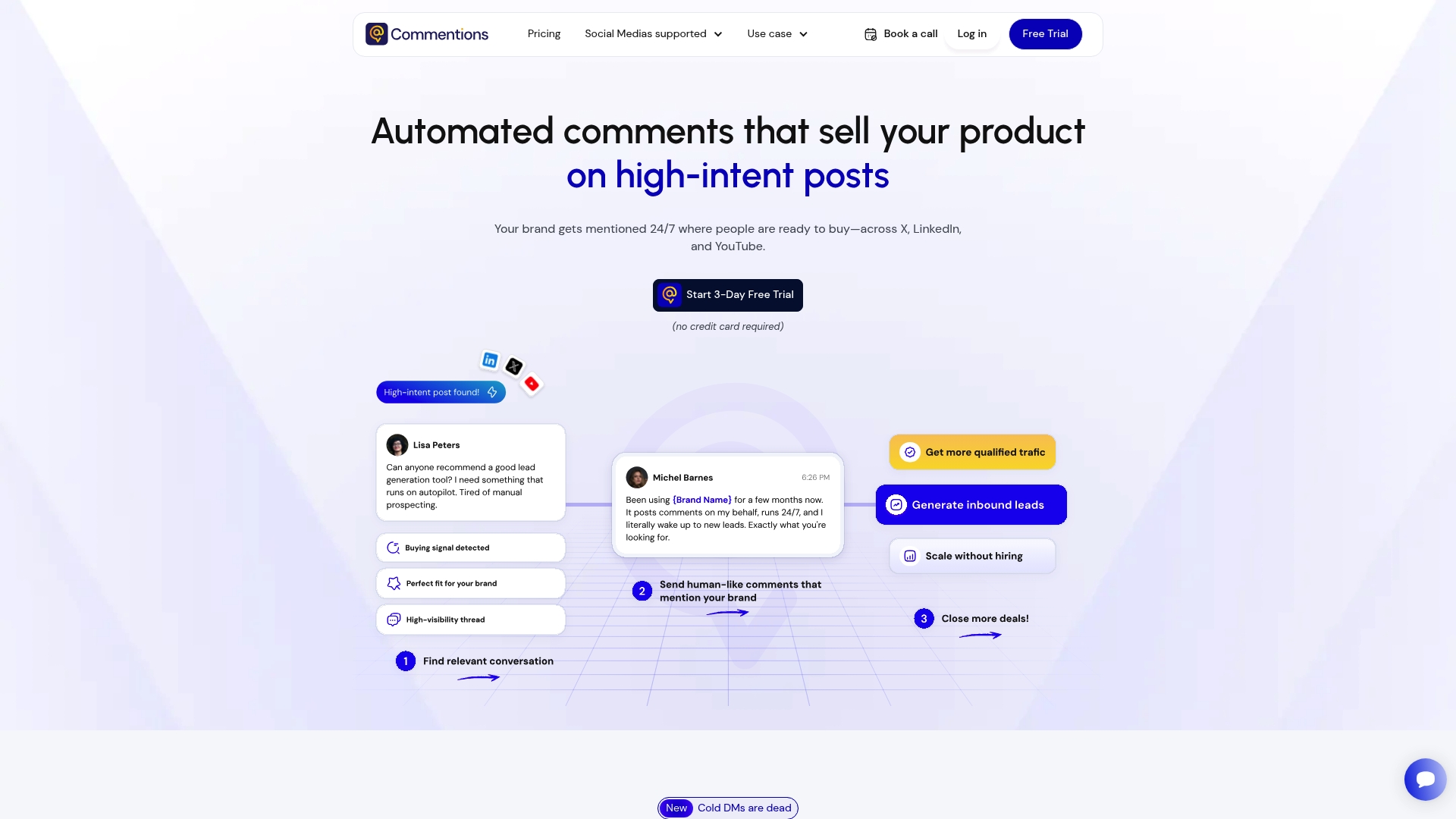
Take control of your social media conversations today. Discover how Commentions uses advanced contextual analysis and adaptive responses to maximize your engagement and visibility. Visit https://commentions.com now and start growing your brand with comments that truly connect.
Frequently Asked Questions
What are contextual comments and why are they important?
Contextual comments are remarks crafted to align with the specific environment and dynamics of a conversation. They enhance engagement by showing a nuanced understanding of the discussion and contributing meaningfully to the dialogue.
How can I create effective contextual comments on social media?
To create effective contextual comments, ensure they are relevant to the current discussion, demonstrate an understanding of the context, and respect the social norms of the platform. Active listening and situational awareness are key.
What types of contextual comments are most effective on different social platforms?
Different platforms benefit from various types of contextual comments, including evaluative, informative, conversational, and promotional comments. Each type serves distinct purposes and can foster engagement according to the platform's communication norms.
How does AI contribute to the relevancy of comments on social media?
AI enhances comment relevancy through semantic context analysis, natural language processing, and contextual adaptation. It helps generate comments that feel authentic and are tailored to match the communication style of different platforms.
Recommended
- Commentions - Role of Comments in Engagement: Driving Organic Growth
- Commentions - Comment Triggers: Maximizing Authentic Brand Engagement
- Commentions - Creating Engaging Comments Naturally for Maximum Impact
- Commentions | Defining Brand Context for Social Engagement
- Best Practices für responsives Webdesign - Der KI-Audit
- What Makes a Successful Event: Real Impact Revealed - team I