Quick Overview
Step 1: Define marketing goals and audience
Building a high-impact marketing automation workflow starts with crystal-clear goal setting and precise audience identification. Your success depends on understanding exactly who you want to reach and what specific outcomes you aim to achieve.
Begin by developing SMART marketing objectives that transform vague intentions into actionable strategies. This means creating goals that are Specific, Measurable, Actionable, Relevant, and Time-bound. For tech founders and digital marketers, these objectives might include:
- Generate 500 qualified leads per month
- Increase website conversion rates by 25% within Q2
- Reduce customer acquisition cost by 15%
- Improve engagement on primary marketing channels
To pinpoint your target audience, you'll want to collect detailed demographic data that reveals who is most likely to be interested in your product or service. This involves analyzing key characteristics such as:
- Professional demographics (job titles, industry)
- Geographic location
- Company size and revenue range
- Technological sophistication
- Specific pain points and challenges
The more precisely you can define these parameters, the more effectively you can craft targeted messaging that resonates deeply with your ideal customer profile.

Here's a quick overview of how key marketing automation features impact your business:
Successful marketing automation starts with understanding your audience better than they understand themselves.
Pro tip: Create a detailed buyer persona document that transforms raw demographic data into a living, breathing representation of your ideal customer, complete with motivations, challenges, and communication preferences.
Step 2: Map actions to each customer journey stage
Successful marketing automation requires strategically aligning your actions with each stage of the customer journey. Your goal is to create a seamless, targeted approach that guides potential customers from initial awareness to committed advocacy.
Start by segmenting your customer journey into distinct stages that reflect your audience's progression. These stages typically include:
- Awareness: Introducing your brand and capturing initial interest
- Consideration: Providing detailed information and building trust
- Decision: Offering compelling reasons to choose your solution
- Retention: Nurturing ongoing customer relationships
- Advocacy: Transforming satisfied customers into brand promoters
For each stage, develop specific marketing tactics that address unique customer needs. In the awareness phase, focus on content that educates and attracts. During consideration, provide in-depth comparisons and case studies. The decision stage requires targeted conversion strategies like personalized demos or trial offers.
Data-driven marketing frameworks emphasize the importance of tailoring your approach based on customer data and behavior. This means tracking interaction metrics, understanding pain points, and dynamically adjusting your messaging to match customer preferences.
Effective customer journey mapping transforms generic marketing into a personalized, responsive experience.
Pro tip: Create a detailed matrix that explicitly links each journey stage with specific content types, communication channels, and conversion goals to ensure no potential customer falls through the cracks.
The table below summarizes common content, channels, and goals for each customer journey stage:

Step 3: Set up triggers and brand context in Commentions
Configuring your marketing automation workflow requires strategic setup of triggers and precise brand context to ensure your social engagement feels authentic and targeted. The goal is to create a system that responds intelligently and represents your brand's unique voice.
Start by defining automation triggers that align with your specific marketing objectives. These triggers will determine when and how your brand engages across social platforms. Your configuration should include:
- Detection parameters for high-engagement posts
- Contextual relevance filters
- Brand voice guidelines
- Interaction frequency limits
- Platform-specific communication rules
When establishing your brand context, focus on creating a nuanced communication profile that captures your brand's personality. This involves specifying:
- Tone of voice (professional, casual, technical)
- Industry-specific language
- Key messaging themes
- Acceptable conversation topics
- Boundaries for engagement
Carefully calibrate your triggers to ensure they generate meaningful interactions without appearing robotic or intrusive. The system should mimic natural, thoughtful human communication.
Effective automation feels personal, not programmed.
Pro tip: Regularly review and refine your brand context settings, testing different trigger configurations to optimize engagement and maintain authenticity.
Step 4: Customize authentic comment templates
Crafting authentic comment templates is the key to making your automated social interactions feel genuinely human and strategically engaging. Your goal is to develop templates that sound natural, provide value, and align perfectly with your brand's unique voice.
Start by creating core template frameworks that capture different interaction scenarios. These templates should be flexible enough to adapt to various contexts while maintaining a consistent brand personality. Consider developing templates for:
- Supportive comments that add genuine insight
- Curiosity-driven interactions that spark conversation
- Expert-level observations demonstrating industry knowledge
- Empathetic responses that show emotional intelligence
- Problem-solving contributions that offer real value
Each template requires strategic customization to prevent sounding robotic. This means building in placeholders for:
- Contextual references specific to the post
- Variable language patterns
- Industry-specific terminology
- Emotional nuance
- Conversational flexibility
The most effective templates strike a delicate balance between consistency and spontaneity. Your automation should feel like a knowledgeable team member participating in conversations, not a repetitive script.
Authentic engagement is about quality, not quantity.
Pro tip: Create a minimum of three variations for each template type to ensure natural linguistic diversity and prevent pattern detection by social platform algorithms.
Step 5: Test and refine the automation workflow
Refinement is the critical process that transforms a good marketing automation workflow into an exceptional, high-performing system. Your goal is to methodically evaluate, analyze, and incrementally improve your automated social engagement strategy.
Begin by establishing comprehensive testing parameters that cover multiple performance dimensions. You'll want to track and measure:
- Engagement rates for different comment templates
- Response quality and contextual relevance
- Platform-specific performance metrics
- Audience interaction patterns
- Brand voice consistency
Implement a systematic testing approach that breaks down your evaluation into structured phases:
- Initial deployment with conservative settings
- Granular performance monitoring
- Data-driven template adjustments
- Incremental optimization
- Continuous refinement cycle
Pay close attention to subtle nuances in how your automated comments are perceived. The difference between an authentic interaction and a robotic response can be incredibly slight.
Small improvements compound into significant competitive advantages.
Pro tip: Create a dedicated spreadsheet to track each template's performance, recording metrics like engagement rate, sentiment, and contextual appropriateness to facilitate data-driven refinements.
Step 6: Monitor performance and optimize strategies
Sustained success in marketing automation demands continuous performance tracking and strategic adaptation. Your workflow is a living system that requires regular assessment and intelligent refinement to maintain its competitive edge.
Establish comprehensive monitoring protocols that capture critical performance indicators across multiple dimensions:
- Engagement metrics (likes, comments, shares)
- Conversion rates for different comment strategies
- Response time and frequency
- Audience sentiment analysis
- Platform-specific interaction patterns
Develop a data-driven optimization framework by implementing:
- Weekly performance review sessions
- Quarterly strategy recalibration
- A/B testing of comment templates
- Segmented audience response tracking
- Real-time performance dashboard creation
The most successful marketing automation workflows are not static systems but dynamic, intelligent mechanisms that learn and adapt. Your goal is to create a self-improving engine that becomes more effective with each interaction.
Continuous improvement is the hallmark of exceptional marketing strategy.
Pro tip: Set up automated reporting that sends weekly performance summaries directly to your team, enabling rapid insights and swift strategic adjustments.
Unlock Effortless Marketing Automation That Feels Human
The challenge of building a high-impact marketing automation workflow lies in creating authentic, timely engagement that aligns with your brand voice while driving meaningful results. This article highlights key pain points such as defining brand context, setting up precise triggers, and crafting natural comment templates to ensure every interaction is personalized and impactful. If you struggle to maintain a consistent and relevant social presence or want to convert every stage of the customer journey into real engagement, then an AI-powered solution is essential.
Commentions.com offers exactly that with its advanced platform designed to automate relevant, human-like comments on social platforms including X, LinkedIn, and YouTube. You can define your brand voice, tailor workflows to each customer journey stage, and instantly engage with high-engagement posts to increase visibility and generate quality leads around the clock. This is your chance to transform static marketing automation into a dynamic, genuinely conversational experience that resonates with your audience.
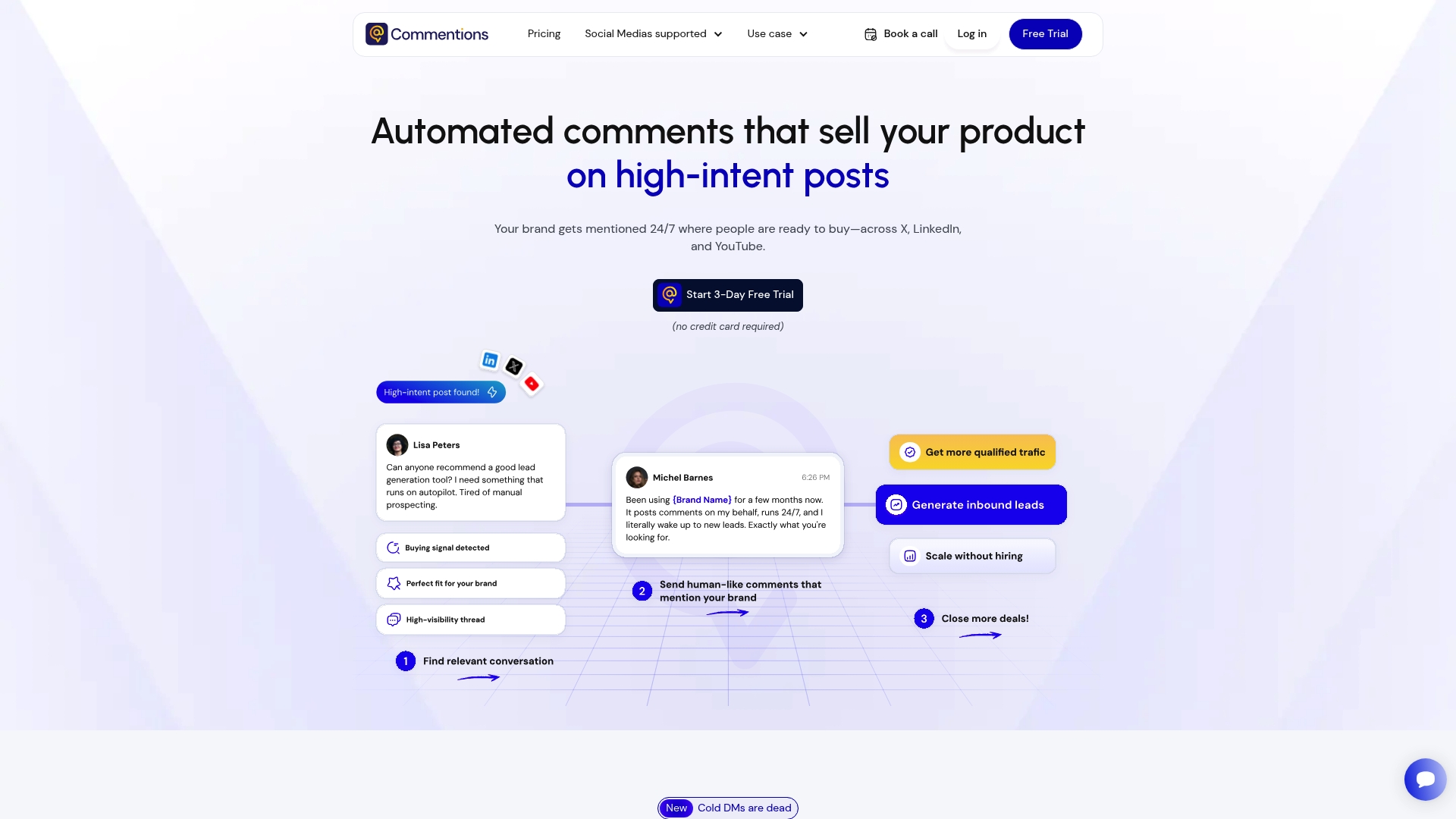
Ready to fast-track your marketing automation with authentic AI-powered engagement Visit Commentions.com today to explore how you can set up personalized workflows that convert. Don’t wait to create the natural social conversations your brand deserves Start building at Commentions landing page now and take your marketing from automated to outstanding.
Learn more about how to build a high-impact marketing automation workflow fast
Frequently Asked Questions
How do I define clear marketing goals for my automation workflow?
To define clear marketing goals, utilize the SMART framework to create objectives that are Specific, Measurable, Actionable, Relevant, and Time-bound. For example, you might aim to generate 500 qualified leads per month. Start by writing down your specific goals to guide your marketing efforts.
What information do I need to identify my target audience?
To identify your target audience, collect detailed demographic data, including professional demographics such as job titles, industry, and geographic location. Analyzing these characteristics will help you create targeted messaging. Gather this data through surveys and research to refine your ideal customer profile.
How can I map content to each stage of the customer journey?
Map content to each stage of the customer journey by identifying specific tactics for Awareness, Consideration, Decision, Retention, and Advocacy. For instance, in the Awareness stage, focus on educational articles and videos. Create a matrix linking each stage with appropriate content types and channels to ensure a comprehensive approach.
What triggers should I set up in my marketing automation system?
Set up automation triggers that align with your marketing objectives, such as detecting high-engagement posts or user behaviors. For example, configure triggers to initiate responses for specific engagement events. Establish clear parameters to create meaningful interactions without appearing robotic.
How do I create authentic comment templates for automated responses?
To create authentic comment templates, develop core frameworks for various interaction scenarios, ensuring they align with your brand's personality. Incorporate placeholders for contextual references to keep responses relevant and natural. Aim to create at least three variations for each template to maintain linguistic diversity.
What metrics should I monitor to optimize my marketing automation workflow?
Monitor engagement metrics like likes, comments, and shares, as well as conversion rates for different strategies. For example, review these metrics weekly to identify patterns and adjust your tactics accordingly. Establish a data-driven framework to guide your continuous performance improvement efforts.
Recommended
- Commentions - 7 Types of Automated Outreach Every Founder Should Know
- Commentions - Role of Automation Tools: Transforming Organic Social Growth
- Commentions - Commenting Workflow Basics: Boost Engagement Authentically