Key Takeaways
AI in Marketing: Core Concepts and Misconceptions
Artificial Intelligence (AI) is revolutionizing marketing strategies by providing powerful capabilities that transform how businesses understand, engage, and convert potential customers. Emerging research on AI marketing technologies reveals a nuanced landscape far more complex than many entrepreneurs initially understand.
At its core, AI in marketing represents computational systems capable of simulating human cognitive functions like reasoning, learning, and pattern recognition. These technologies go beyond simple automation, enabling sophisticated analysis and predictive capabilities that can dramatically enhance lead generation and engagement strategies. Key aspects of AI marketing include:
- Predictive Analytics: Using historical data to forecast customer behaviors
- Personalization Engines: Tailoring content and recommendations in real-time
- Automated Customer Segmentation: Identifying precise audience clusters
- Natural Language Processing: Understanding and generating human-like communication
Despite growing adoption, significant misconceptions persist about AI's actual capabilities. Many founders mistakenly believe AI can completely replace human marketing efforts, when in reality, it serves as a powerful augmentation tool. Comprehensive marketing technology reviews consistently emphasize that AI works best when strategically integrated with human creativity and strategic oversight.
The most successful AI marketing implementations recognize technology as a collaborative partner, not a standalone solution. Marketers must actively train, monitor, and refine AI systems to ensure they align with brand voice, ethical standards, and specific business objectives.
Pro tip: Start small with AI marketing by selecting one focused use case, such as customer segmentation or personalized email campaigns, and incrementally expand your technological capabilities.
Types of AI Marketing Tools and Techniques
Modern marketing teams leverage a diverse array of AI technologies to transform traditional engagement strategies. Advanced digital marketing communication tools have emerged, providing sophisticated capabilities that go far beyond basic automation and enable more intelligent, responsive marketing approaches.
Marketing AI technologies can be categorized into several key functional areas:
- Machine Learning Algorithms: Enabling predictive customer behavior analysis
- Natural Language Processing (NLP): Supporting content generation and sentiment analysis
- Computer Vision: Enhancing visual content recommendations and targeting
- Predictive Analytics: Forecasting marketing performance and customer trends
- Automated Segmentation: Creating precise audience targeting strategies
Systematic marketing technology reviews reveal that successful AI implementation requires understanding each tool's specific capabilities and strategic application. Different AI techniques serve unique marketing objectives, from generating personalized email content to optimizing digital advertising campaigns.
The most powerful AI marketing tools integrate multiple technologies, creating comprehensive systems that can analyze data, generate insights, predict outcomes, and even recommend specific marketing actions. This multi-dimensional approach allows marketers to move beyond reactive strategies and develop more proactive, intelligent engagement models that adapt in real-time to changing customer behaviors and market dynamics.

Pro tip: Start by selecting AI tools that align closely with your most critical marketing challenges, and gradually expand your technological capabilities as you gain confidence and demonstrate initial successes.
Here's a quick overview of how AI marketing tools impact business outcomes:
How AI Drives Engagement and Lead Generation
AI technologies have fundamentally transformed the landscape of marketing engagement, providing unprecedented capabilities for understanding and connecting with potential customers. Experimental marketing research demonstrates significant improvements in critical metrics like click-through rates, purchase rates, and customer loyalty through intelligent marketing approaches.
The primary mechanisms by which AI drives engagement and lead generation include:
- Personalized Content Targeting: Delivering precisely tailored messaging
- Predictive Customer Behavior Analysis: Anticipating consumer needs before they arise
- Real-Time Interaction Optimization: Adapting communication dynamically
- Intelligent Lead Scoring: Ranking and prioritizing potential customer interactions
- Automated Relationship Management: Maintaining consistent, personalized communication
Interactive marketing frameworks reveal that AI's most powerful contribution is its ability to facilitate value co-creation between businesses and consumers. By understanding individual customer preferences, AI enables marketing strategies that feel less like traditional sales pitches and more like genuine, individualized conversations.
Modern AI-driven engagement goes beyond simple automation, creating intelligent systems that learn and adapt continuously. These technologies analyze vast amounts of data to understand nuanced customer behaviors, preferences, and potential pain points, allowing marketers to develop hyper-targeted approaches that resonate on a deeply personal level.
Pro tip: Implement AI tools incrementally, focusing first on one specific engagement channel where you can measure clear, quantifiable improvements in customer interaction.
Real-World Applications for Startups and Brands
AI marketing technologies have become transformative tools for startups and established brands seeking competitive advantages in increasingly complex digital landscapes. Current marketing research applications demonstrate profound opportunities for businesses to optimize their growth strategies through intelligent technological approaches.
Specific real-world AI applications for startups and brands include:
- Customer Journey Mapping: Tracking and predicting user interactions
- Personalized Campaign Development: Creating hyper-targeted marketing messages
- Predictive Market Analysis: Identifying emerging business opportunities
- Automated Customer Segmentation: Precisely categorizing potential client groups
- Intelligent Performance Forecasting: Estimating campaign effectiveness before launch
Emerging AI adoption trends highlight how businesses are leveraging these technologies to accelerate growth and optimize marketing strategies. Small startups and global brands alike are discovering that AI enables data-driven decision-making with unprecedented precision and efficiency.
The most successful implementations view AI not as a replacement for human creativity, but as a powerful collaborative tool that enhances strategic capabilities. By integrating AI technologies thoughtfully, businesses can develop more nuanced, responsive marketing approaches that adapt in real-time to complex consumer behaviors and market dynamics.
Pro tip: Begin your AI marketing journey by selecting one specific, measurable process where technology can provide immediate, quantifiable improvements in your current marketing workflow.
Risks, Challenges, and Ethical Concerns
AI marketing technologies bring profound capabilities alongside significant potential risks that demand careful, strategic consideration. Marketing communication ethical frameworks highlight critical challenges that businesses must navigate to maintain consumer trust and regulatory compliance.
Key ethical risks and challenges in AI marketing include:
- Data Privacy Vulnerabilities: Potential misuse of personal information
- Algorithmic Bias: Unintended discrimination in targeting mechanisms
- Transparency Limitations: Unclear decision-making processes
- Consumer Manipulation Risks: Potential psychological exploitation
- Consent and Tracking Concerns: Boundaries of data collection and usage
Systematic marketing technology reviews reveal a significant gap between technological capabilities and ethical marketing practices. Responsible AI implementation requires ongoing vigilance, transparent processes, and proactive ethical considerations that prioritize consumer rights and autonomy.
Successful AI marketing strategies must balance technological innovation with robust ethical safeguards. This means developing clear guidelines, implementing comprehensive consent mechanisms, regularly auditing AI systems for potential biases, and maintaining absolute transparency about how customer data is collected, processed, and utilized.
Pro tip: Establish a dedicated ethics review process for your AI marketing technologies, involving diverse perspectives to identify and mitigate potential risks before implementation.
Comparing AI Marketing to Traditional Strategies
Marketing technologies are undergoing a profound transformation, with AI challenging long-established approaches to customer engagement and lead generation. Comparative performance research reveals significant advantages of AI-driven strategies over traditional marketing methodologies.
Key differences between AI and traditional marketing strategies include:
- Data Processing: AI handles massive datasets in real-time
- Personalization: Hyper-targeted versus broad-based messaging
- Response Speed: Instantaneous adaptive communication
- Predictive Capabilities: Forward-looking versus retrospective analysis
- Cost Efficiency: Automated processes reducing manual intervention
Comprehensive marketing strategy reviews demonstrate that traditional marketing relies on historical data and manual processes, while AI marketing leverages advanced automation and predictive tools for superior targeting and engagement.
The most transformative aspect of AI marketing is its ability to learn and adapt continuously. Unlike traditional strategies that depend on static segmentation and manual interpretation, AI systems can dynamically adjust strategies based on real-time consumer interactions, creating more responsive and intelligent marketing ecosystems.

Compare the strengths of AI marketing versus traditional strategies:
Pro tip: Start transitioning from traditional to AI marketing by first mapping your existing customer journey and identifying specific touchpoints where automated, intelligent systems can provide immediate measurable improvements.
Elevate Your Lead Generation with AI-Driven Organic Engagement
The article highlights the challenge of leveraging AI for personalized and authentic marketing engagement that drives lead generation without losing the human touch. You want to overcome common pain points like ineffective targeting, lack of real-time interaction optimization, and struggles with scaling personalized communication that aligns with your brand voice and goals. AI marketing tools like predictive analytics and personalization engines work best when integrated strategically to augment—not replace—your creative efforts.
At Commentions.com, we solve these exact challenges by automating contextual, human-like comments on high-engagement posts across platforms like X, LinkedIn, and YouTube. This helps inject your brand organically into relevant conversations, boosting your visibility and generating qualified leads 24/7 while preserving your unique tone. By defining your brand context and workflows, you retain full control and ensure every comment feels natural and aligned with your marketing strategies.
Start transforming your AI marketing approach today by combining smart automation with authentic interaction. Discover how Commentions complements the core AI concepts discussed in the article and helps you capture targeted traffic effortlessly.
Boost your lead generation organically with Commentions
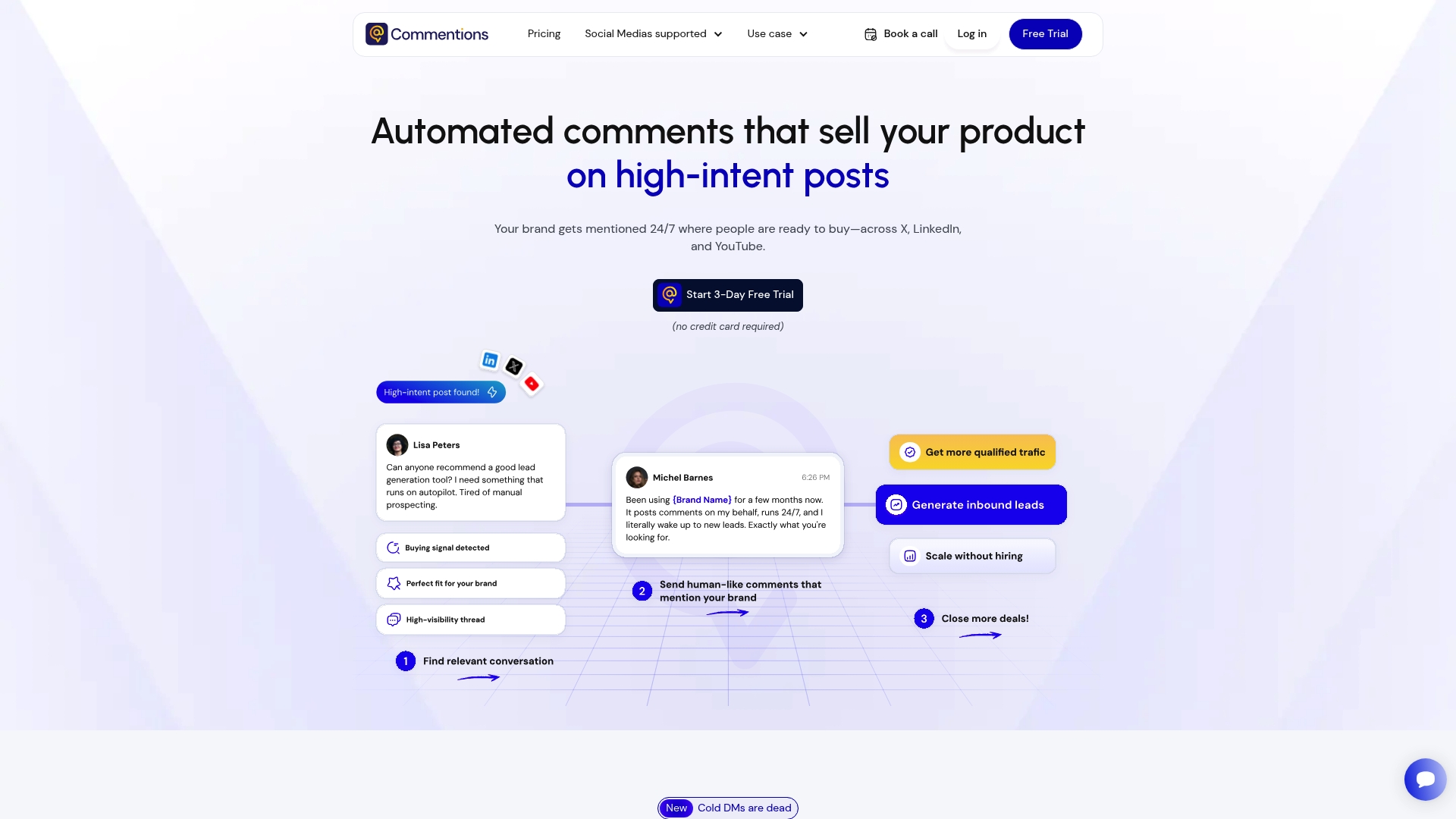
Ready to amplify your marketing impact using AI-powered conversation intelligence Visit Commentions.com now to get started and see immediate improvements in engagement and lead flow.
Frequently Asked Questions
What are the main benefits of using AI in marketing?
AI in marketing provides benefits like enhanced predictive analytics, real-time personalization, automated customer segmentation, and improved lead generation strategies, ultimately leading to better engagement and conversion rates.
How does AI improve lead generation compared to traditional marketing methods?
AI improves lead generation by utilizing vast amounts of data to predict customer behaviors, enabling hyper-targeted campaigns and real-time adaptations that traditional marketing strategies cannot achieve.
What types of AI tools are used for marketing purposes?
Common AI tools for marketing include predictive analytics, personalization engines, automated segmentation technologies, natural language processing for content creation, and machine learning algorithms for customer behavior analysis.
How can startups effectively implement AI in their marketing strategies?
Startups should begin by identifying one specific area, such as customer segmentation or personalized email campaigns, to implement AI tools gradually and expand their capabilities as they see success.
Recommended
- Commentions - Role of AI in Branding: Boosting Authentic Engagement
- Commentions - What Is Comment Automation: Unlocking Engagement
- Commentions | Role of AI in Social Media: Transforming Engagement
- Commentions | 7 Examples of AI Marketing for Organic Engagement
- AI in Marketing: Transforming Client Acquisition - Jarrod Harman
- How AI Tools Are Making Online Marketing Easier and More Profitable for Small Businesses - City Web Company | Digital Marketing Agency