Quick Summary
Step 1: Define your brand context and engagement tone
Defining your brand context and engagement tone is critical for creating authentic and memorable social interactions. Your goal is to craft a distinctive voice that resonates with your target audience while maintaining consistency across different platforms.
Successful brand engagement starts with understanding how consumers perceive brand relationships. Consumer insights reveal core features like quality, emotional bond, and personal value that drive meaningful connections. To establish your unique engagement approach, consider these strategic steps:
- Analyze your target demographic's communication preferences
- Review your brand's core values and mission statement
- Identify the emotional drivers that connect your audience to your brand
- Develop a consistent communication framework
Brands that authentically align their communication style with audience expectations see significantly higher engagement rates.
Begin by mapping out your brand's personality traits. Are you professional and authoritative, or casual and conversational? Consumer-brand engagement research demonstrates that trust and interactivity are fundamental to building strong relationships. Your engagement tone should feel natural, reflecting your brand's unique character while speaking directly to your audience's needs and aspirations.
Pro tip: Create a brand voice document that outlines specific communication guidelines, tone descriptors, and acceptable language styles to maintain consistency across all marketing channels.
Step 2: Identify high-impact platforms and target audiences
Choosing the right social platforms and understanding your target audiences are essential for driving organic brand growth. Your goal is to strategically select platforms where your ideal customers are most active and engaged.

Here's how core audience segments differ in focus and communication needs:
To effectively identify your high-impact platforms and target audiences, follow these strategic steps:
- Analyze demographic data for each potential platform
- Map your audience's online behaviors and preferences
- Assess platform engagement rates and audience relevance
- Create detailed audience persona profiles
- Compare platform-specific user demographics
Strategic platform selection is more important than being present on every social channel.
Comprehensive audience analysis involves examining demographic, behavioral, and psychographic data. This means going beyond basic age and location information to understand your audience's motivations, challenges, and communication styles.
Consider these key factors when selecting platforms:
- Where does your target audience spend most of their online time?
- What type of content performs best on each platform?
- Which platforms align with your brand's communication style?
- What are the typical engagement rates for your industry?
Pro tip: Develop a dynamic audience research process that includes regular quarterly reviews of your platform performance and audience behavior to ensure continuous optimization of your social media strategy.
Step 3: Set up automated, contextual commenting workflows
Creating intelligent, automated commenting workflows allows you to maintain consistent brand engagement without consuming endless hours of manual effort. Your goal is to develop a strategic system that generates authentic interactions across social platforms.
Automated engagement workflows leverage AI sentiment analysis to search for relevant posts and generate contextually appropriate comments. This approach enables brands to maintain visibility and meaningful connections at scale.
To design effective automated commenting workflows, consider these critical components:
- Define your brand voice parameters
- Establish content relevance filters
- Create a diverse comment generation strategy
- Implement sentiment matching algorithms
- Set up real-time engagement tracking
Authentic automation requires nuanced understanding of context and audience preferences.
Social media interaction management tools can help brands efficiently handle large volumes of potential engagement points while preserving communication quality. The key is developing workflows that feel personal and spontaneous.
Implement your commenting workflow systematically:
- Select platforms with highest audience relevance
- Configure AI-driven comment generation rules
- Establish approval mechanisms for sensitive interactions
- Monitor and continuously refine your workflow
Pro tip: Always maintain a human oversight mechanism that allows manual review and intervention to ensure your automated comments remain contextually appropriate and aligned with your brand's communication standards.
Step 4: Optimize comment relevance and authenticity
Crafting authentic comments that genuinely connect with your audience requires strategic thinking and nuanced communication. Your objective is to transform automated interactions into meaningful dialogues that reflect your brand's core values and personality.
Authenticity is a critical driver for brand success by building trust and fostering deeper connections with your audience. This means moving beyond generic, transactional interactions to create comments that demonstrate real understanding and empathy.
To optimize your comment strategy, focus on these key principles:
- Align comments with your brand's core purpose
- Demonstrate genuine interest in the conversation
- Provide meaningful, contextual insights
- Avoid repetitive or scripted language
- Reflect your unique brand personality
Authentic engagement transforms casual interactions into lasting brand relationships.
Evaluate comments using a quality scorecard to ensure each interaction adds value. This means going beyond surface-level responses and creating comments that:
- Address the specific context of the post
- Offer unique perspectives
- Show genuine understanding
- Invite further dialogue
Pro tip: Develop a comprehensive content style guide that outlines your brand's voice, acceptable comment styles, and key communication principles to maintain consistency and authenticity across all automated interactions.
Step 5: Measure awareness growth and adjust strategies
Tracking brand awareness is crucial for understanding the effectiveness of your organic growth efforts and making data-driven strategic adjustments. Your goal is to develop a comprehensive measurement approach that provides actionable insights into your brand's market perception and engagement trajectory.
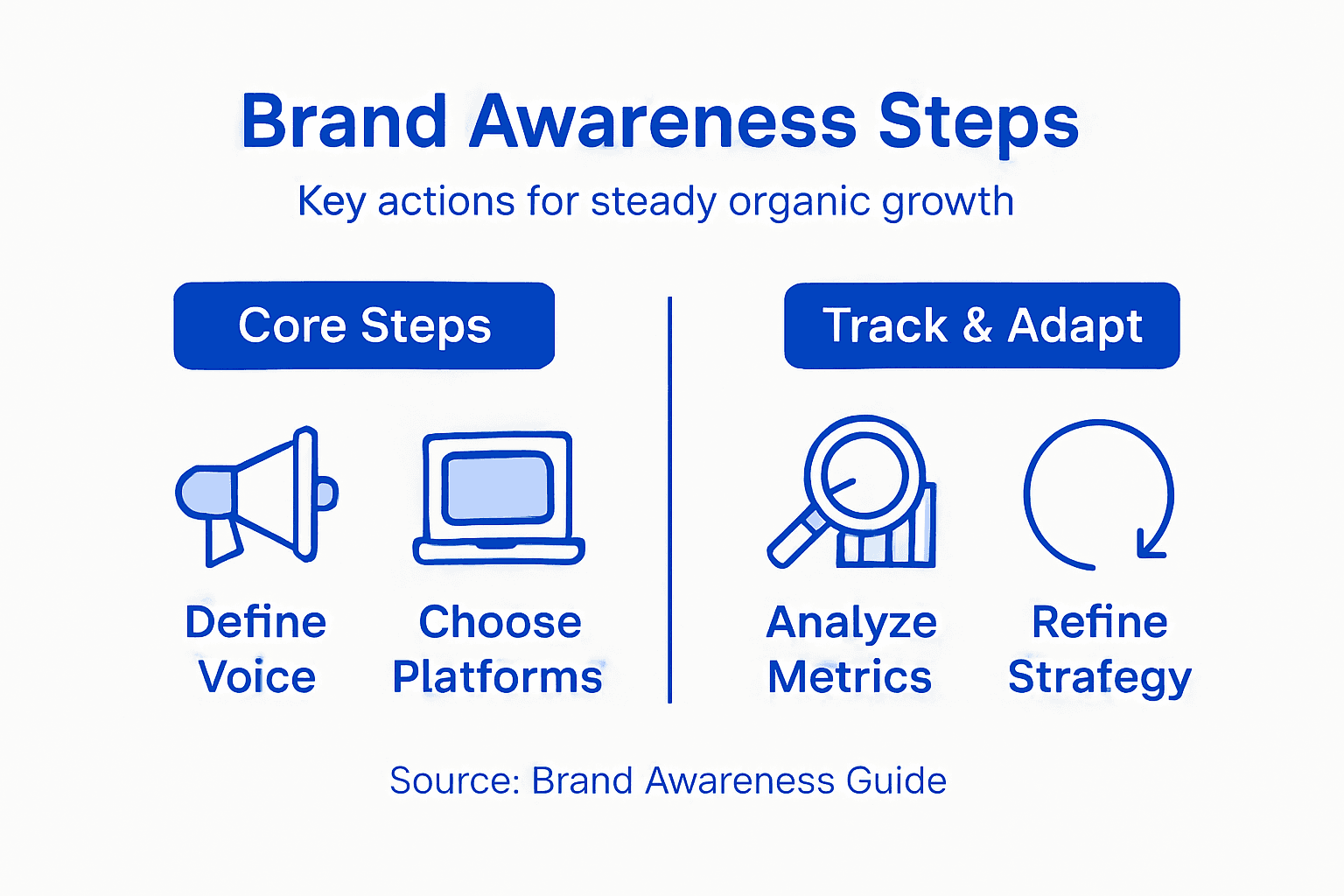
Practical methods for measuring brand awareness include analyzing multiple signals such as branded search volume, social mentions, and direct traffic. These metrics offer a holistic view of how your brand is perceived and gaining traction in the marketplace.
Key methods for measuring brand awareness compared:
Implement a robust measurement strategy by tracking these key indicators:
- Branded search volume trends
- Social media mention frequency
- Direct website traffic
- Sentiment analysis of brand conversations
- Engagement rate across platforms
Continuous monitoring transforms data into strategic marketing intelligence.
Comprehensive brand awareness measurement requires examining multiple signals beyond traditional metrics. This means looking deeper into:
- Quantitative reach metrics
- Qualitative sentiment analysis
- Audience growth patterns
- Comparative performance against competitors
Regularly review these metrics to identify trends, understand audience response, and refine your engagement strategies accordingly.
Pro tip: Create a monthly dashboard that consolidates key brand awareness metrics, allowing you to quickly visualize progress and identify areas requiring strategic optimization.
Boost Your Brand Awareness with Smart Automated Engagement
The article highlights the challenge of maintaining authentic and relevant engagement while scaling your brand’s organic growth. Key goals include defining your brand context, selecting the right platforms, creating automated yet authentic comment workflows, optimizing comment relevance, and measuring brand awareness effectively. These pain points underscore the difficulty of consistently delivering human-like, on-point interactions that build trust and foster deep connections with your audience.
This is where Commentions can transform your strategy. Our AI-powered platform enables you to automatically post highly contextual, engaging comments on social platforms like X, LinkedIn, and YouTube that align perfectly with your brand voice and tone. By detecting high-impact posts and seamlessly embedding relevant brand mentions you can increase visibility and generate leads around the clock without sacrificing authenticity.
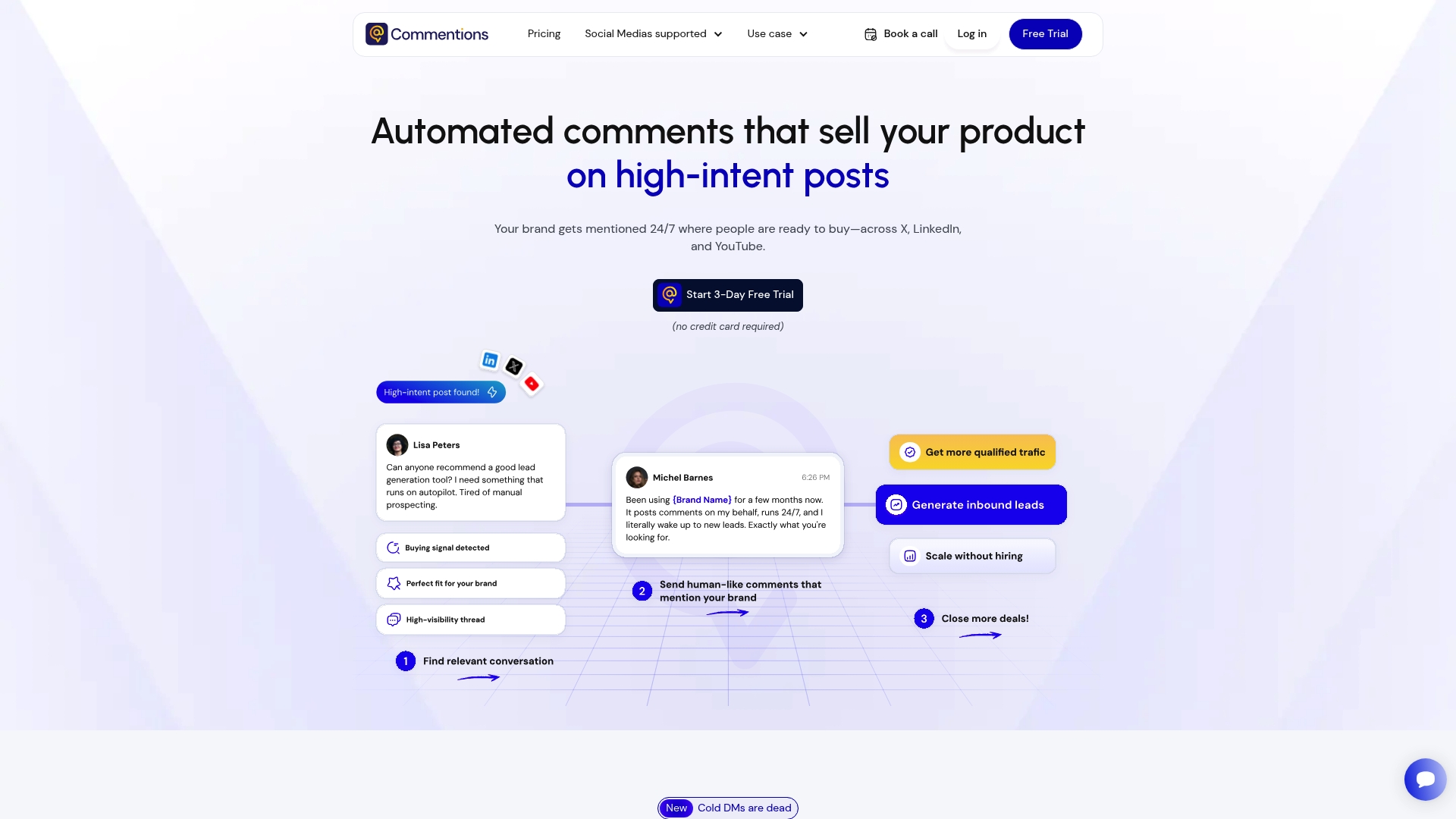
Take control of your brand’s organic growth today with Commentions. Set up personalized workflows that respect your unique communication style, optimize comment authenticity, and track your brand’s awareness trajectory effortlessly. Don’t let manual effort limit your reach. Visit Commentions.com now and start turning every social interaction into an opportunity for meaningful engagement and measurable growth.
Frequently Asked Questions
What are the key steps to improve brand awareness for organic growth?
To improve brand awareness, define your brand context and engagement tone, identify high-impact platforms, set up automated commenting workflows, optimize comment relevance, and measure awareness growth. Begin by mapping out your brand's personality and identifying the platforms where your target audience is most active.
How can I determine which social media platforms are best for my brand?
Analyze demographic data and audience behavior to identify which platforms your target audience uses most. Focus on two to three platforms where your audience engages frequently rather than attempting to be on every channel.
What should I include in my brand voice document?
Your brand voice document should outline communication guidelines, tone descriptors, and acceptable language styles. This ensures consistency across all marketing channels and aligns your messaging with your audience's expectations.
How can I automate my brand's comments while maintaining authenticity?
Create automated commenting workflows by defining brand voice parameters and using sentiment analysis to generate contextually relevant responses. Set up real-time engagement tracking to monitor interactions and regularly refine your comment strategies.
What metrics should I track to measure brand awareness effectively?
Key metrics for measuring brand awareness include branded search volume, social mentions, direct website traffic, and sentiment analysis. Implement a robust tracking strategy by establishing a monthly performance dashboard to visualize these metrics and make data-informed adjustments.
How often should I review my audience data and social media performance?
Regular quarterly reviews of your audience data and social media performance are advisable. This ensures that your strategies remain aligned with audience preferences and helps you adapt to changes in engagement patterns effectively.
Recommended
- Commentions | Brand Awareness: How It Drives Organic Growth
- Commentions - Organic Social Media Growth: Achieve Real Brand Visibility
- Commentions - 7 Key Types of Social Platforms for Brand Growth
- Commentions - What Is Brand Alignment and Why It Drives Growth