Key Takeaways
Defining engagement automation and its purpose
Engagement automation represents a sophisticated technological strategy that leverages artificial intelligence to transform how brands and organizations interact with their audiences. At its core, AI systems are designed to augment human interactions across digital platforms, creating more responsive and personalized communication workflows.
The fundamental purpose of engagement automation extends beyond simple task completion. It involves strategically using intelligent algorithms to:
- Enhance interaction quality and responsiveness
- Reduce manual administrative overhead
- Create scalable, personalized communication channels
- Improve overall audience engagement metrics
Unlike traditional communication methods, engagement automation doesn't just replace human effort—it amplifies human potential. Intelligent systems can analyze complex interaction patterns, predict audience preferences, and generate contextually relevant responses at unprecedented speeds.
Engagement automation transforms administrative procedures by automatically improving accessibility, transparency, and service responsiveness across multiple interaction domains.
These AI-powered tools are particularly powerful for digital marketers, founders, and creators who need to maintain consistent brand presence without constant manual intervention. By detecting high-engagement opportunities and generating human-like interactions, automation platforms help brands extend their reach far beyond traditional marketing limitations.
Pro tip: Start small by automating low-complexity interactions and gradually expand your engagement automation strategy as you understand your audience's communication preferences.
Types of engagement automation technologies
Engagement automation technologies encompass a wide range of sophisticated AI-powered tools designed to transform digital interactions. Governments and organizations utilize diverse automation technologies to enhance communication, streamline processes, and create more responsive interaction channels.
The primary types of engagement automation technologies include:
- Chatbots and Conversational AI: Automated communication systems that simulate human-like interactions
- Robotic Process Automation (RPA): Tools that automate repetitive administrative tasks
- Predictive Analytics Engines: Intelligent systems that forecast audience behavior and preferences
- Automated Content Generation: AI-powered platforms that create contextually relevant communication
- Social Media Interaction Bots: Algorithms designed to engage audiences across digital platforms
Each technology serves a unique purpose in the engagement ecosystem. Intelligent interaction platforms can analyze complex communication patterns, detect high-engagement opportunities, and generate personalized responses at unprecedented speeds.
Artificial intelligence technologies enable real-time responsive engagement, cross-agency data integration, and sophisticated interaction workflows.
These technologies are particularly transformative for digital marketers, founders, and creators who need scalable communication strategies. By leveraging AI-driven tools, brands can maintain consistent presence and generate meaningful interactions without constant manual intervention.
Here's a comparison of engagement automation technologies and their business impact:
Pro tip: Evaluate automation technologies based on their ability to enhance, not replace, human communication nuances and your specific audience engagement goals.
How automated engagement workflows function
Automated engagement workflows represent a sophisticated approach to digital interaction management, leveraging advanced AI to streamline administrative processes. These intelligent systems transform how organizations manage communication, reducing manual overhead and increasing response efficiency.
The core components of automated engagement workflows typically include:
- Input Collection: Gathering data from multiple digital touchpoints
- Contextual Analysis: AI-powered interpretation of communication signals
- Response Generation: Creating personalized, contextually relevant interactions
- Performance Tracking: Monitoring engagement metrics and workflow effectiveness
- Continuous Learning: Refining interaction strategies based on real-time feedback
Intelligent workflow systems operate through a complex series of algorithmic decisions. They analyze incoming communication signals, match them against predefined parameters, and generate responses that mimic human-like interaction patterns with remarkable precision.
Automated workflows integrate cross-agency data and employ predictive analytics to anticipate communication needs, dramatically improving collaboration and service delivery speed.
These workflows are particularly powerful for digital marketers and founders seeking to maintain consistent brand presence. By automating repetitive interaction tasks, brands can scale their engagement strategies without sacrificing personalization or authenticity.

Pro tip: Design your engagement workflows with flexibility, allowing periodic human review to ensure AI-generated interactions maintain your brand's unique communication voice.
Key benefits for brands and creators
Engagement automation offers transformative advantages for brands and creators, empowering them to enhance content production and consumer interactions. These intelligent systems revolutionize digital marketing strategies by providing unprecedented scalability and personalization capabilities.
The key benefits for brands and creators include:
- Efficiency Acceleration: Dramatically reduce time spent on routine communication tasks
- Personalization at Scale: Deliver tailored content and interactions to diverse audience segments
- Data-Driven Insights: Gain real-time understanding of audience preferences and behavior
- Consistent Brand Voice: Maintain uniform messaging across multiple digital platforms
- Resource Optimization: Reallocate human talent toward strategic creative initiatives
Intelligent engagement platforms enable brands to transcend traditional marketing limitations. They analyze complex interaction patterns, predict audience responses, and generate contextually relevant communications with remarkable accuracy.
Automated engagement strategies boost audience interactions, improving brand visibility and fostering deeper consumer connections across digital ecosystems.
These technologies are particularly powerful for digital entrepreneurs and marketing professionals seeking to maximize their online presence. By automating repetitive engagement tasks, creators can focus on high-value strategic activities that drive meaningful audience relationships.

Pro tip: Start with small-scale automation experiments, carefully monitoring performance metrics to gradually refine and expand your engagement workflow.
Risks, pitfalls, and legal compliance issues
Engagement automation technologies introduce complex legal and ethical challenges that demand careful navigation. Organizations must address critical governance and regulatory concerns to maintain trust and prevent potential misuse of automated systems.
The primary risks and compliance challenges include:
- Algorithmic Bias: Potential for unintended discrimination in automated interactions
- Data Privacy Violations: Risks of inappropriate personal information handling
- Transparency Gaps: Lack of clear accountability in automated decision-making
- Intellectual Property Conflicts: Potential copyright and content ownership issues
- Regulatory Compliance: Navigating complex international data protection regulations
Automated engagement systems require sophisticated governance frameworks to mitigate potential legal and ethical risks. Brands must implement robust monitoring mechanisms that ensure fairness, accuracy, and compliance with evolving digital regulations.
Adaptive, participatory governance models are essential to address the complex risks associated with AI-powered engagement technologies.
Digital marketers and founders must proactively develop comprehensive risk management strategies. This involves continuous auditing of automated systems, establishing clear ethical guidelines, and maintaining human oversight to prevent potential algorithmic errors or unintended consequences.
Below is a summary of major legal and ethical risks, with strategies for mitigation:
Pro tip: Conduct regular comprehensive audits of your engagement automation systems, documenting decision-making processes and maintaining transparent records to demonstrate regulatory compliance.
Supercharge Your Brand Growth with Engagement Automation
The article highlights the challenge brands face in maintaining authentic, personalized interactions at scale while reducing manual workload and increasing audience engagement. If you are seeking to automate human-like conversations that align with your unique brand voice and generate real-time, contextually relevant interactions across social platforms, Commentions.com offers the perfect solution. By detecting high-engagement posts and automatically posting relevant comments on platforms like X, LinkedIn, and YouTube, our AI-powered marketing platform helps you overcome the pain points of audience targeting and content relevancy to drive organic traffic and leads effortlessly.
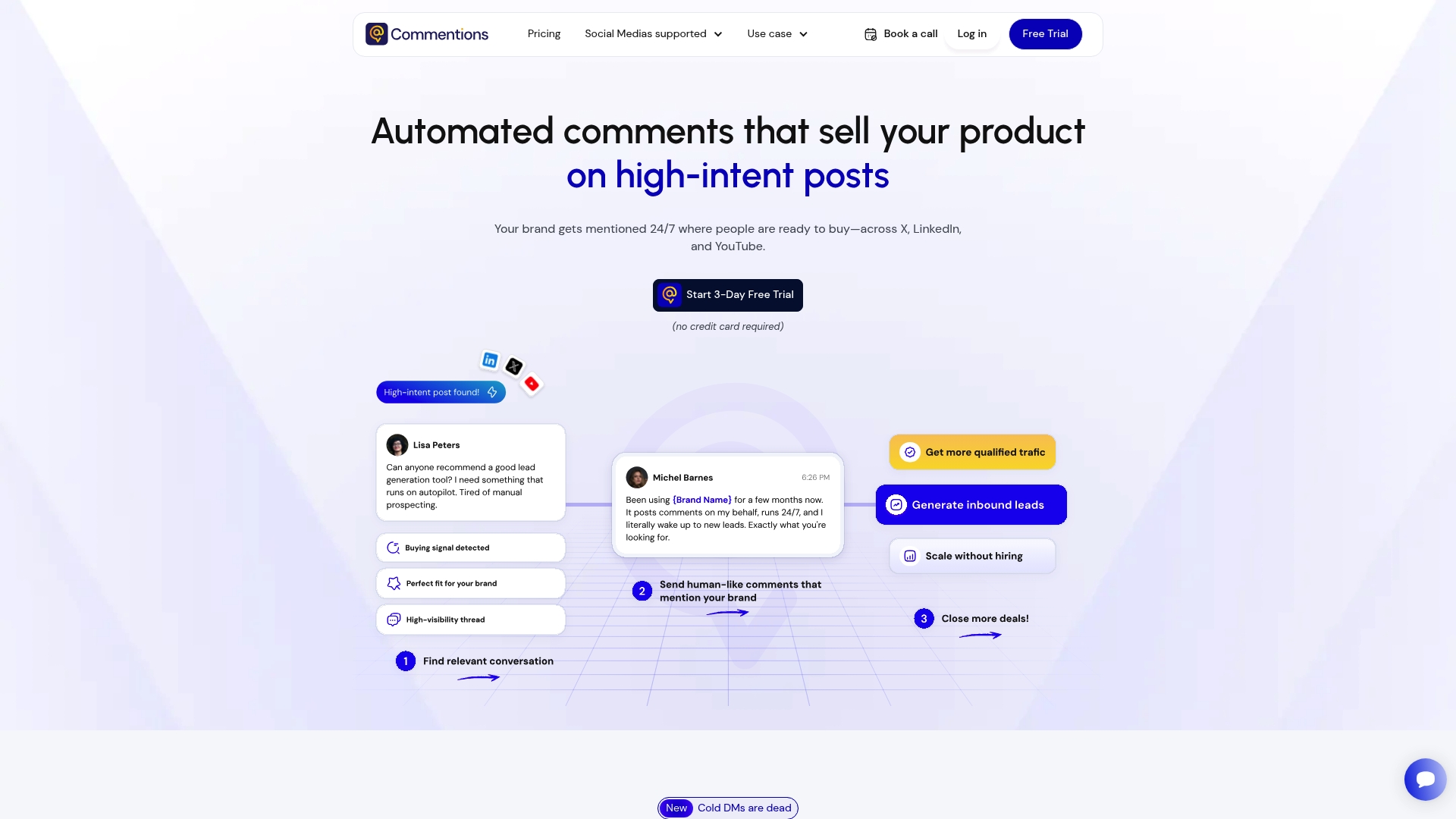
Experience the power of intelligent engagement automation tailored for creators, founders, and marketers who want to expand reach without compromising authenticity. Visit Commentions to learn how you can define your brand context, tone, and workflows for consistent and scalable organic growth. Take the first step in transforming your digital marketing strategy today with Commentions AI-powered platform.
Frequently Asked Questions
What is engagement automation?
Engagement automation refers to the use of artificial intelligence technologies to enhance how brands interact with their audiences, focusing on creating personalized communication workflows and improving engagement metrics.
How can engagement automation improve audience engagement?
By utilizing intelligent algorithms, engagement automation can enhance interaction quality, predict audience preferences, and generate contextually relevant responses, thus fostering deeper connections and improving overall engagement.
What types of technologies are used in engagement automation?
Engagement automation encompasses various tools such as chatbots, robotic process automation (RPA), predictive analytics engines, automated content generation, and social media interaction bots, each serving a unique role in enhancing digital communications.
What are the potential risks associated with engagement automation?
Key risks include algorithmic bias, data privacy violations, transparency gaps in decision-making, and regulatory compliance issues. Brands must implement governance frameworks and monitoring strategies to mitigate these risks.
Recommended
- Commentions - Role of Automation Tools: Transforming Organic Social Growth
- Commentions - Role of AI in Branding: Boosting Authentic Engagement
- Commentions - How to Boost Brand Recall Using Automated Engagement