Key Takeaways
Defining Comment Triggers and Their Purpose
In the digital marketing ecosystem, comment triggers represent strategic communication mechanisms designed to initiate genuine interactions and stimulate meaningful audience engagement across social platforms. These carefully crafted comment strategies go beyond simple automated responses, functioning as intelligent engagement tools that connect brands with potential customers through contextually relevant communication.
Research reveals that comment triggers serve a nuanced purpose in online discourse. Systematic analysis of user interactions demonstrates how strategically placed comments can transform passive content consumption into active community participation. By understanding the psychological triggers that prompt user response, brands can create comments that feel authentic, spark conversation, and drive meaningful interaction.
Effective comment triggers operate on several key principles. They must be contextually relevant, providing genuine value to the original content while subtly highlighting the brand's expertise or perspective. Unlike generic or spammy comments, these triggers aim to contribute meaningfully to the discussion, creating a sense of organic connection. The goal is not just visibility, but building trust and credibility through intelligent, human-like interactions that resonate with the target audience.
Pro Tip: Develop a comment trigger strategy by creating response templates that reflect your brand's unique voice while remaining flexible enough to adapt to specific content contexts.
Types of Comment Triggers on Social Platforms
Social media platforms host a complex ecosystem of interaction types, with comment triggers emerging as sophisticated mechanisms for stimulating engagement. These triggers can be classified into distinct categories that reflect different interaction dynamics and psychological engagement strategies. Research on social media discourse reveals multiple strategic approaches to generating meaningful online interactions.
The primary types of comment triggers include emotional resonance triggers, knowledge-based triggers, and conversational catalyst triggers. Emotional resonance triggers leverage shared experiences or sentiments that prompt immediate response, such as comments that evoke empathy, humor, or personal connection. Knowledge-based triggers involve comments that introduce intriguing information, ask thought-provoking questions, or challenge existing perspectives, compelling users to share their insights or challenge the presented viewpoint.
Conversational catalyst triggers represent a more nuanced approach, designed to transform passive content consumption into active dialogue. These triggers carefully balance between providing value and creating subtle intrigue. Social media interaction studies demonstrate that successful triggers often incorporate elements of storytelling, personal experience, or contextual expertise that invite further exploration and dialogue.
Here's a summary of the main types of comment triggers and how they enhance engagement:
Pro Tip: Map out your comment trigger strategy by creating a matrix of different interaction types and potential engagement scenarios, allowing for flexible and adaptive communication approaches.
How AI Identifies and Activates Triggers
Artificial Intelligence has revolutionized the process of identifying and activating comment triggers through sophisticated neural network technologies. Advanced machine learning algorithms enable precise detection of subtle linguistic and contextual signals that indicate potential engagement opportunities or communication challenges.
The AI identification process involves multiple sophisticated layers of analysis. Natural language processing systems first deconstruct comment text into granular components, examining sentiment polarity, linguistic complexity, emotional undertones, and contextual relevance. These algorithms can detect nuanced communication patterns, such as potential confrontational language, empathetic expressions, or knowledge-seeking inquiries that might trigger meaningful interactions. Computational linguistic models employ complex scoring mechanisms that evaluate the probability of generating constructive dialogue based on intricate textual and contextual parameters.

Technically, AI trigger activation operates through a dynamic workflow of pattern recognition and predictive modeling. The system continuously learns from previous interaction data, refining its understanding of what constitutes an effective comment trigger across different social platforms and content types. By analyzing massive datasets of successful and unsuccessful interactions, these AI models develop increasingly sophisticated strategies for identifying communication opportunities that can transform passive content consumption into active, engaging dialogues.
Pro Tip: Regularly update your AI model's training data to ensure it remains adaptive and responsive to evolving communication patterns across different social platforms.
Setting Up Contextual Workflows for Brands
Contextual workflows represent the strategic backbone of authentic brand engagement, transforming social media interactions from random exchanges to purposeful communication channels. Structured comment prompt strategies enable brands to design systematic approaches that encourage meaningful audience participation through carefully crafted interaction frameworks.
The core of effective contextual workflows involves developing multi-dimensional engagement templates that adapt to different social platform nuances. These templates must incorporate sophisticated triggers that recognize emotional context, content relevance, and audience sentiment. Emotional response modeling demonstrates the critical importance of creating workflows that can dynamically interpret and respond to the subtle emotional undertones present in user-generated content, ensuring that brand interactions feel genuine and responsive.
Successful workflow design requires a comprehensive approach that combines technological sophistication with human-like communication strategies. Brands need to develop algorithmic frameworks that can recognize contextual cues, understand platform-specific communication norms, and generate responses that feel organic and purposeful. This involves creating flexible interaction models that can detect sentiment shifts, anticipate potential engagement opportunities, and craft comments that add genuine value to the existing conversation.
Pro Tip: Create a comprehensive interaction matrix that maps potential audience responses and pre-designs contextually appropriate comment strategies for each potential scenario.
Risks, Platform Policies, and Compliance Issues
Brands navigating the complex landscape of social media engagement must carefully understand the intricate risks associated with automated comment strategies. Platform policy regulations highlight critical boundaries that prevent potential misuse of comment triggers, emphasizing the importance of maintaining ethical and authentic interaction standards.
The primary compliance risks involve potential violations of platform-specific guidelines, which can result in account restrictions or permanent bans. Automated commenting systems must be meticulously designed to avoid behaviors perceived as spam, harassment, or manipulative engagement. Online user comment regulations underscore the delicate balance between strategic engagement and potentially punitive platform actions, requiring brands to develop sophisticated moderation frameworks that prioritize genuine, contextually appropriate interactions.
Successful risk mitigation demands a multi-layered approach that combines technological safeguards with human oversight. Brands need robust systems that can dynamically assess comment appropriateness, detect potential policy violations, and instantly adapt to changing platform guidelines. This involves creating comprehensive compliance matrices that map out potential interaction scenarios, predefined acceptable response parameters, and automatic intervention mechanisms that prevent inadvertent policy breaches.

This table highlights major risks of comment automation and strategies for reducing them:
Pro Tip: Develop a comprehensive compliance checklist that includes platform-specific guidelines, automated content filtering rules, and periodic manual review protocols to ensure consistent adherence to engagement standards.
Unlock Authentic Engagement with AI-Powered Comment Triggers
Brands today face the challenge of turning passive social media audiences into active, engaged communities. This article highlighted how effective comment triggers build trust, spark genuine conversations, and avoid the pitfalls of generic or spammy responses. If your goal is to maximize authentic brand engagement by leveraging emotional resonance, knowledge-based insights, and conversational catalysts, then a tailored, contextual workflow is essential.
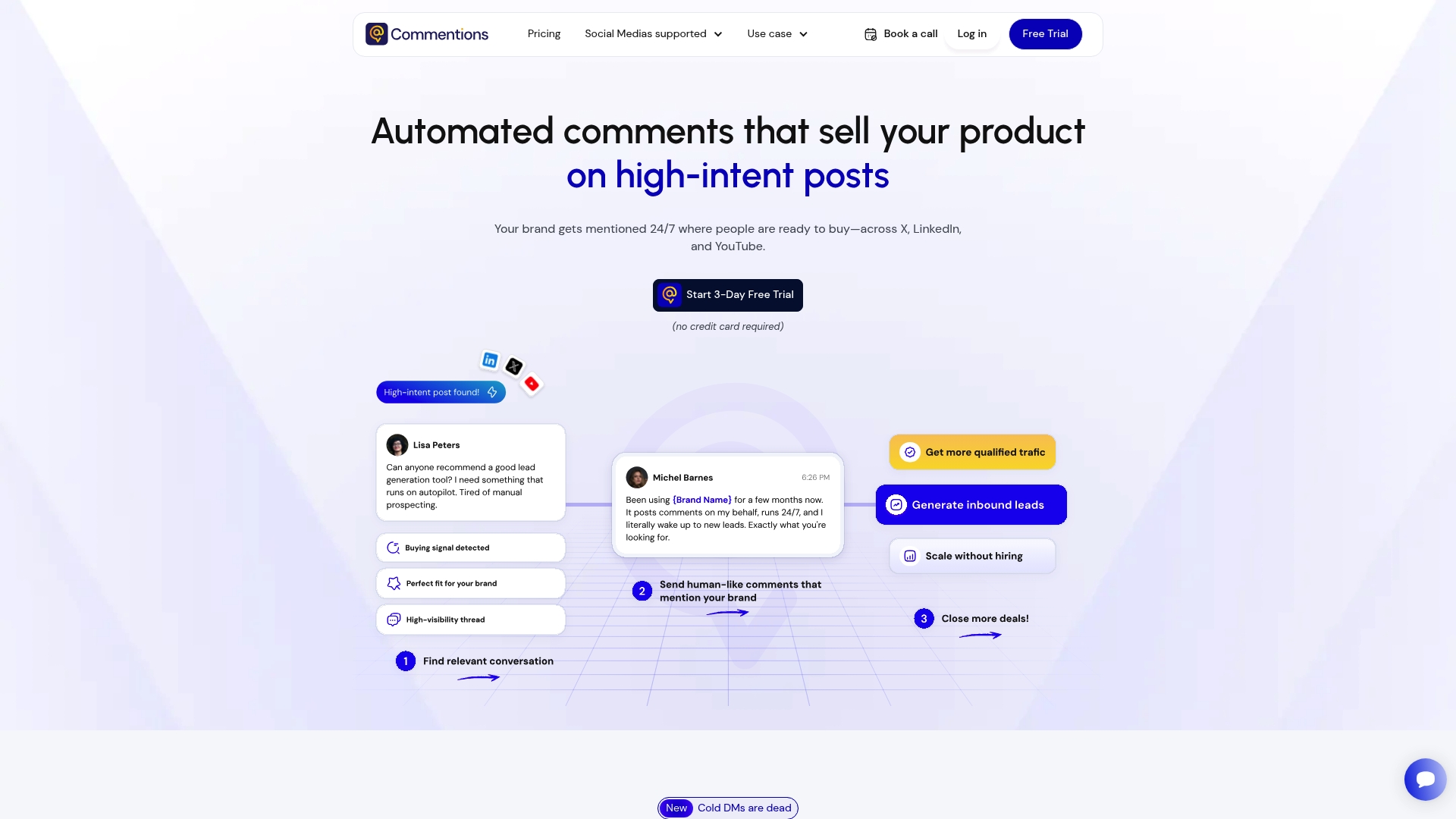
Commentions.com offers a cutting-edge AI marketing platform designed precisely for this purpose. By automatically detecting high-impact posts and posting relevant, human-like comments on platforms like X, LinkedIn, and YouTube, Commentions transforms brand interaction into meaningful dialogue that increases visibility and generates leads around the clock. You define your brand tone and context to keep comments natural and aligned with your marketing goals.
Discover how Commentions can help you implement sophisticated comment trigger strategies that drive real engagement while staying fully compliant with platform policies.
Explore Commentions now and take control of your brand’s social conversations.
Frequently Asked Questions
What are comment triggers and how do they work?
Comment triggers are strategic communication mechanisms designed to stimulate genuine interactions on social platforms. They leverage psychological engagement techniques to transform passive content consumption into active community participation.
What types of comment triggers can enhance audience engagement?
There are three main types of comment triggers: emotional resonance triggers, which evoke shared feelings; knowledge-based triggers, which share interesting information or ask questions; and conversational catalyst triggers, which invite ongoing dialogue.
How does AI identify and activate comment triggers?
AI identifies and activates comment triggers using advanced machine learning algorithms and natural language processing. These systems analyze linguistic patterns, sentiment, and contextual signals to encourage meaningful interactions based on previous engagement data.
What are the risks and compliance issues associated with using automated comment strategies?
The primary risks include potential violations of platform-specific guidelines, which can lead to account restrictions or bans. Brands need to develop robust moderation frameworks and compliance checklists to ensure that comment automation adheres to engagement standards.