Key Takeaways
Defining Social Listening and Core Misconceptions
Social listening represents a strategic approach to understanding digital conversations and tracking online discussions about brands, industries, and relevant topics. At its core, social listening goes beyond merely monitoring mentions - it involves deeply analyzing digital discourse to extract meaningful insights.
Contrary to popular belief, social listening is not just about tracking brand mentions or collecting superficial data. Research exploring emerging communication taxonomies suggests it’s a complex process of interpreting nuanced online interactions. The practice requires sophisticated tools and analytical frameworks that can decode sentiment, context, and underlying communication patterns.
Many founders and entrepreneurs mistakenly view social listening as a passive activity. However, advanced studies on digital communication reveal it’s an active, strategic process involving several critical components:
- Identifying relevant digital channels
- Tracking conversations across platforms
- Analyzing sentiment and emotional undertones
- Extracting actionable business intelligence
- Understanding audience perceptions and expectations
The most significant misconception is treating social listening as a one-time snapshot rather than an ongoing, dynamic process. Successful brands recognize it as a continuous feedback mechanism that provides real-time insights into market trends, customer preferences, and potential opportunities for innovation.
Pro Tip: Strategic Monitoring Approach: Develop a structured social listening workflow that integrates automated tracking tools with periodic manual analysis to capture both quantitative metrics and qualitative nuances in digital conversations.
Types of Social Listening Tools and Methods
Social listening tools represent a diverse ecosystem of technologies designed to help brands and founders extract meaningful insights from digital conversations. These tools range from basic monitoring platforms to sophisticated analytical systems that can decode complex communication patterns across multiple digital channels.
Basic social listening approaches typically include manual tracking methods like searching hashtags, reading comments, and monitoring brand mentions. However, more advanced solutions offer comprehensive capabilities. Top social listening platforms for brand mentions often integrate multiple features such as sentiment analysis, real-time tracking, and cross-platform monitoring.
The primary categories of social listening tools can be categorized into several key types:
- Monitoring Tools: Track mentions across social platforms
- Sentiment Analysis Tools: Evaluate emotional tone of digital conversations
- Competitive Intelligence Tools: Analyze competitor discussions and market trends
- Audience Insight Tools: Understand demographic and psychographic characteristics
- Crisis Management Tools: Detect and help manage potential reputation risks
Advanced social listening methods go beyond simple keyword tracking. Strategic social listening on platforms like X demonstrates how modern tools can provide nuanced insights by analyzing context, engagement patterns, and underlying communication dynamics.
Founders and marketers should recognize that effective social listening requires a combination of technological tools and human interpretation. Automated systems provide data, but strategic human analysis transforms raw information into actionable business intelligence.
Here’s a quick comparison of basic versus advanced social listening approaches:
Pro Tip: Strategic Tool Selection: Choose social listening tools that offer API integration, real-time analytics, and customizable reporting to maximize your insights and minimize manual monitoring effort.
How Social Listening Powers Organic Brand Growth
Organic brand growth emerges from understanding and responding to digital conversations in real-time. Social listening transforms passive data collection into a strategic mechanism for connecting with audiences, identifying opportunities, and driving meaningful engagement.

Advanced sentiment analysis techniques reveal how brands can leverage digital discourse to create more targeted, responsive marketing strategies. By systematically analyzing online interactions, founders can uncover nuanced insights about audience perceptions, preferences, and emerging trends that traditional market research methods often miss.
The process of organic growth through social listening involves several critical components:
- Identifying authentic audience conversations
- Detecting emerging market trends
- Understanding customer pain points
- Recognizing potential product improvement opportunities
- Tracking competitive landscape shifts
Argumentation mining in social media demonstrates how sophisticated analysis can decode the underlying narratives and emotional drivers behind online discussions. This approach goes beyond surface-level metrics, providing deep insights into why customers think and feel the way they do.
Successful brands treat social listening as a continuous feedback loop. Rather than viewing digital conversations as static data points, they recognize these interactions as dynamic, evolving dialogues that require constant attention and strategic interpretation.
Pro Tip: Continuous Learning Approach: Develop a systematic workflow that integrates social listening insights into your product development, marketing, and customer engagement strategies, allowing real-time adaptation to audience needs.
Key Features and Real-World Use Cases
Social listening platforms provide sophisticated tools that transform raw digital conversations into actionable business intelligence. These advanced systems go far beyond simple mention tracking, offering comprehensive insights that can drive strategic decision-making across multiple organizational domains.
Social listening platforms like Pulsar demonstrate the complexity of modern digital analysis tools, which can capture nuanced interactions across diverse digital channels. The key features typically include real-time monitoring, sentiment analysis, demographic segmentation, and trend prediction capabilities that enable brands to understand their audience with unprecedented depth.
The most critical features of social listening technologies encompass:
- Comprehensive Monitoring: Track mentions across multiple platforms simultaneously
- Sentiment Analysis: Decode emotional undertones of digital conversations
- Audience Segmentation: Identify specific demographic and psychographic groups
- Competitive Intelligence: Benchmark against industry competitors
- Predictive Trend Detection: Anticipate emerging market shifts
Altmetrics research highlights how social listening extends beyond traditional marketing metrics, providing insights into digital discourse that can inform product development, customer service, and brand positioning strategies. Real-world applications range from crisis management and reputation monitoring to identifying potential product improvement opportunities.
Successful implementation requires understanding that social listening is not a one-size-fits-all solution. Each organization must customize its approach based on specific business objectives, target audience characteristics, and industry dynamics.
Pro Tip: Strategic Integration Approach: Design a flexible social listening workflow that allows for continuous adaptation, enabling your team to quickly pivot strategies based on real-time digital conversation insights.
Risks, Limitations, and Common Pitfalls
Social listening comes with significant challenges that can undermine its effectiveness if not carefully managed. While powerful, these technologies are not infallible and require sophisticated understanding to navigate potential limitations and risks effectively.

Research into social listening methodologies reveals critical vulnerabilities in digital discourse analysis, particularly around misinformation detection and interpreting complex communication contexts. Founders and marketers must develop nuanced strategies to overcome these inherent technological constraints.
The most significant risks and limitations include:
- Data Interpretation Challenges: Misreading sentiment and context
- Echo Chamber Effects: Reinforcing existing biases
- Privacy and Ethical Concerns: Potential invasive data collection
- Algorithmic Bias: Systematic skewing of insights
- Information Overload: Difficulty filtering meaningful signals
Misinformation presents a particularly complex obstacle in social listening. Digital conversations can rapidly spread inaccurate narratives, creating distorted representations of audience perceptions. Sophisticated analysis requires multiple verification techniques and cross-referencing data sources to ensure accuracy.
Successful social listening demands a critical, balanced approach. Brands must recognize these tools as supplements to human insight, not absolute oracles of market understanding. Combining technological capabilities with strategic human interpretation creates the most robust intelligence gathering method.
For reference, here is a summary of common risks in social listening and strategies to address them:
Pro Tip: Verification Protocol: Develop a multi-step validation process that cross-references social listening data with traditional research methods, ensuring more comprehensive and accurate insights.
Harness Social Listening Insights to Fuel Authentic Brand Growth
The article highlights the challenge brands and founders face in interpreting complex digital conversations and turning those insights into real-time growth opportunities. Pain points like data interpretation challenges, ongoing audience engagement, and creating authentic digital dialogues call for smart, scalable solutions. With social listening requiring continuous, nuanced analysis, it is critical to move beyond passive monitoring to active participation that resonates with your target audience.
Commentions.com offers a unique way to activate the power of social listening by automatically generating human-like comments that fit your brand voice and context across platforms like X, LinkedIn, and YouTube. This AI-powered platform helps you instantly engage with high-engagement posts to increase visibility, drive targeted traffic, and generate qualified leads 24/7 without the burnout of manual effort. Instead of just gathering data, transform your social listening approach into authentic conversations that spark organic growth.
Ready to convert social listening insights into actionable engagement that accelerates your brand’s presence?
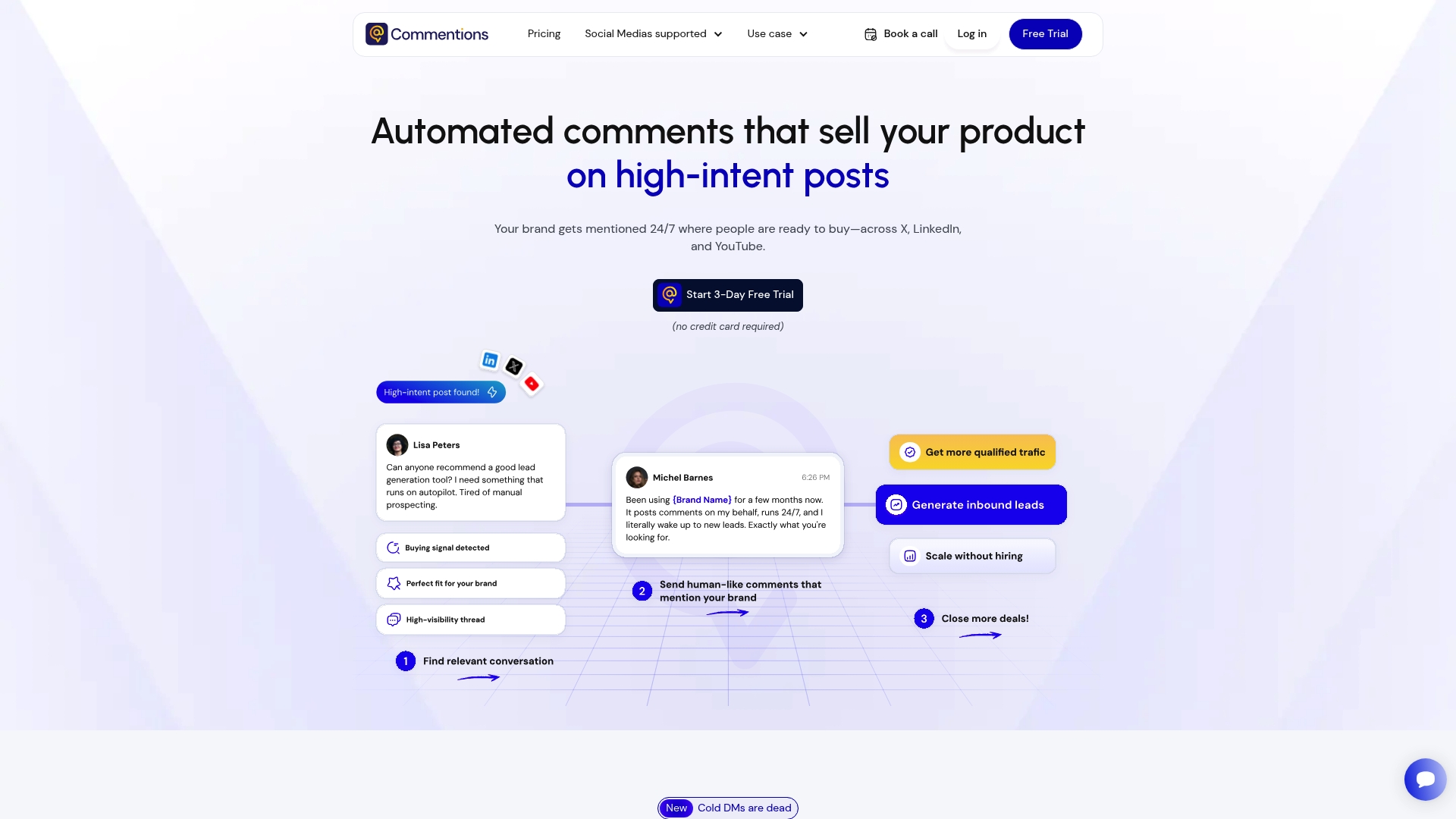
Discover how easy it is to amplify your brand’s voice and connect with relevant audiences naturally. Visit Commentions.com today to start growing organically with tailored AI commenting workflows that match your brand tone and marketing goals.
Frequently Asked Questions
What is social listening?
Social listening is a strategic approach that involves tracking and analyzing digital conversations about brands, industries, and relevant topics to extract meaningful insights beyond just monitoring mentions.
How does social listening contribute to brand growth?
Social listening helps brands understand real-time digital conversations, identify audience needs, detect emerging market trends, and adapt marketing strategies to foster stronger engagement and organic growth.
What types of tools are used for social listening?
Social listening tools include monitoring tools for tracking mentions, sentiment analysis tools for evaluating emotional tones, competitive intelligence tools for analyzing competitors, audience insight tools for understanding demographics, and crisis management tools for managing reputation risks.
What are some common risks associated with social listening?
Common risks include data interpretation challenges, echo chamber effects, privacy concerns, algorithmic bias, and information overload, which can hinder the effectiveness of social listening if not properly managed.