Key Takeaways
Defining AI in Social Media Today
Artificial Intelligence (AI) in social media represents a sophisticated ecosystem of algorithmic technologies transforming digital interactions. Emerging research on AI media convergence reveals a complex landscape where synthetic content, user engagement, and technological innovation intersect dramatically.
At its core, AI in social media encompasses advanced algorithms capable of analyzing user behaviors, generating personalized content, and automating complex interactions. These systems leverage machine learning and natural language processing to understand context, sentiment, and user preferences with remarkable precision. Comprehensive literature reviews highlight AI’s multifaceted applications, ranging from content moderation to intelligent recommendation systems that predict user interests with unprecedented accuracy.
The transformative power of AI in social media extends beyond simple automation. Modern platforms now employ intelligent recommendation engines that dynamically curate content, sentiment analysis tools that decode emotional nuances, and predictive algorithms that anticipate user engagement patterns. These technologies enable brands and creators to craft more targeted, personalized experiences that resonate deeply with specific audience segments.
Pro tip: Leverage AI-powered social media insights by continuously experimenting with platform-specific tools and tracking granular performance metrics to refine your engagement strategy.
Key AI Technologies and How They Work
Machine Learning and Natural Language Processing form the backbone of AI technologies transforming social media interactions. Advanced AI technologies are reshaping digital communication platforms through sophisticated algorithms that analyze massive datasets with unprecedented precision and speed.
Three core AI technologies dominate social media innovation. Machine Learning Algorithms continuously learn from user interactions, adapting content recommendations and predicting engagement patterns. Natural Language Processing (NLP) enables systems to understand, interpret, and generate human-like text, powering everything from chatbots to sentiment analysis. Graph Neural Networks provide sophisticated mechanisms for understanding complex social connections, mapping intricate relationship networks and detecting potential interactions with remarkable accuracy.

The practical applications of these technologies are profound. Sentiment analysis tools can decode emotional nuances in user comments, recommendation engines personalize content feeds in real-time, and predictive models help brands understand audience behaviors before they occur. These AI technologies don’t just process data - they create intelligent, adaptive systems that transform how digital interactions are understood and managed.
Here is a summary of key AI technologies shaping social media today:
Pro tip: Experiment with multiple AI tools to understand their unique strengths, and always validate algorithmic insights with human perspective to maintain authentic engagement.
Major Applications Driving Engagement and Growth
AI-powered social media applications are revolutionizing digital marketing strategies, offering unprecedented capabilities for engagement and growth. Advanced AI technologies transform marketing approaches by enabling precise targeting, personalized content delivery, and real-time audience interaction.
The core applications driving social media engagement include predictive analytics, personalized recommendation systems, and automated content optimization. AI-driven data scraping and analysis provide sophisticated insights into customer behavior, allowing brands to craft hyper-targeted marketing strategies. These technologies enable businesses to understand audience preferences with remarkable granularity, predicting potential interactions and tailoring content that resonates deeply with specific demographic segments.
Specific engagement-driving applications include sentiment analysis tools that decode emotional responses, chatbots providing instant customer interaction, and dynamic content recommendation engines that adapt in real-time. These AI technologies don’t merely process data - they create intelligent ecosystems that anticipate user needs, optimize engagement strategies, and transform how brands communicate across digital platforms. By leveraging machine learning algorithms, companies can now predict user behavior, customize communication approaches, and create more meaningful digital experiences.
Pro tip: Implement a multi-tool AI strategy that combines different analytics platforms to gain comprehensive insights and validate machine-generated recommendations with human expertise.
Benefits and Trade-Offs for Marketers
AI technologies present a complex landscape of opportunities and challenges for digital marketers. Emerging research reveals nuanced benefits and strategic considerations that demand careful navigation and strategic implementation.
The primary benefits include dramatically enhanced consumer engagement, precision targeting, and data-driven decision-making capabilities. Marketers gain unprecedented insights through advanced analytics that decode complex user behaviors and preferences. Social media marketing technologies introduce critical ethical considerations alongside innovative capabilities, requiring a balanced approach that prioritizes both technological innovation and user trust.

However, significant trade-offs accompany these technological advances. Potential risks include algorithmic bias, privacy concerns, and the creation of restrictive digital echo chambers that limit diverse perspectives. Sophisticated AI systems might inadvertently reinforce existing marketing stereotypes or generate recommendations that feel invasive rather than personalized. Smart marketers must develop robust frameworks that leverage AI’s power while maintaining transparency, respecting user privacy, and ensuring ethical data usage.
The following table compares major benefits and trade-offs of using AI in social media marketing:
Pro tip: Develop a comprehensive AI ethics checklist that evaluates algorithmic outputs for potential bias, ensuring your marketing strategies remain both innovative and responsible.
Risks, Challenges, and Ethical Concerns
Artificial Intelligence in social media introduces profound ethical challenges that demand rigorous examination and proactive management. Critical risks encompass complex privacy and trust implications that extend far beyond traditional technological concerns, challenging existing regulatory and ethical frameworks.
Key risks include algorithmic bias, privacy invasion, and the potential for synthetic content manipulation. AI systems can inadvertently perpetuate discriminatory patterns, create restrictive information ecosystems, and generate hyper-realistic misinformation that undermines digital trust. Transparent practices and systematic accountability become crucial in navigating these complex ethical landscapes, requiring continuous monitoring and adaptive governance strategies.
The most significant challenges emerge from AI’s capacity to generate and amplify content without human oversight. Deepfake technologies, recommendation algorithms that create echo chambers, and automated systems that can potentially spread misinformation represent critical areas of concern. Organizations must develop robust ethical guidelines that prioritize human agency, protect individual privacy, and maintain transparency in algorithmic decision-making processes.
Pro tip: Implement a comprehensive AI ethics framework that includes regular algorithmic audits, diverse representation in AI development teams, and clear mechanisms for challenging and correcting potential biases.
Harness AI to Transform Your Social Media Engagement
The article explores how AI technologies like machine learning, natural language processing, and intelligent recommendation systems are revolutionizing social media marketing by enabling personalized, dynamic interactions. If you are facing challenges with maintaining authentic engagement while leveraging AI to target your audience precisely and create natural conversations, Commentions.com offers a powerful solution designed just for this. Our AI-powered platform automatically detects high-engagement posts on platforms like X, LinkedIn, and YouTube, allowing your brand to join conversations with relevant, human-like comments that feel genuine and aligned with your tone.
By using Commentions, you can overcome common pain points such as algorithmic bias and robotic communication that alienate users. You get the best of AI’s precision combined with an adaptable, authentic voice that drives targeted traffic and increases visibility 24/7. Say goodbye to manual content moderation stress and hello to automated, ethical engagement backed by advanced AI technologies similar to those discussed in the article.
Unlock the potential of AI-driven social media marketing now
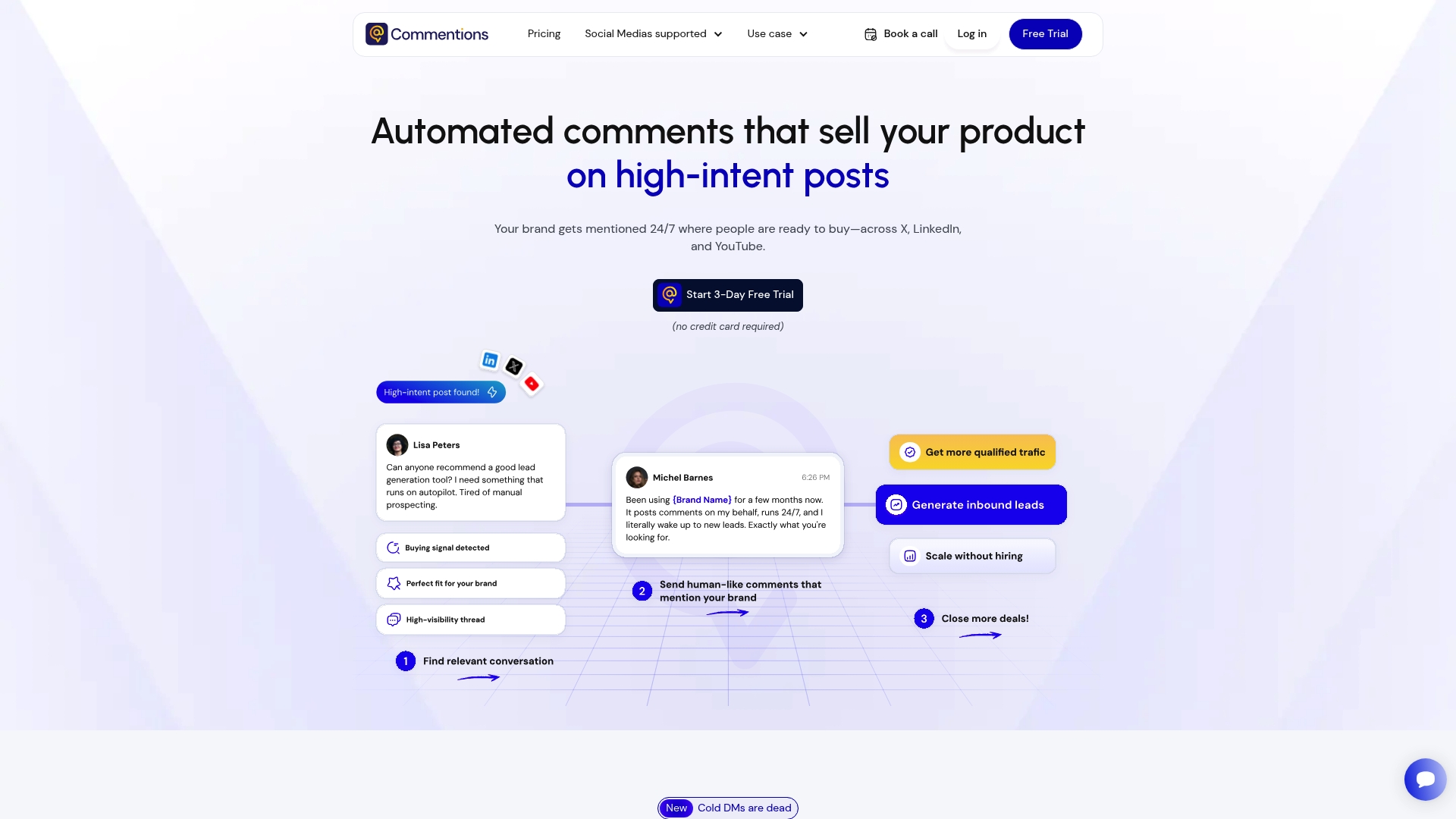
Experience instant impact by harnessing AI tools that amplify your brand presence while maintaining authenticity. Visit Commentions to start growing your organic reach through context-aware, AI-powered commenting tailored to your marketing goals. Don’t wait to turn AI insights into real audience connections—transform your strategy today!
Frequently Asked Questions
What are the main technologies behind AI in social media?
AI in social media primarily relies on Machine Learning, Natural Language Processing (NLP), and Graph Neural Networks. These technologies analyze user interactions, understand human language, and map social relationships to enhance user engagement.
How does AI improve engagement on social media platforms?
AI improves engagement through predictive analytics, personalized recommendation systems, and automated content optimization. These tools help brands understand user behavior and tailor content to meet audience preferences, resulting in higher interaction rates.
What are the ethical concerns associated with AI in social media?
The ethical concerns include algorithmic bias, privacy invasion, and the potential for misinformation through synthetic content. It’s crucial for organizations to develop ethical guidelines that promote transparency and user trust while managing AI technologies.
How can marketers effectively utilize AI for social media strategies?
Marketers can leverage AI by adopting a multi-tool strategy that incorporates various analytics platforms, validating AI-generated insights with human perspectives, and continuously experimenting with different AI technologies for better engagement outcomes.