Most american startups waste valuable hours fine tuning their social media presence without a clear strategy for automation. For tech savvy founders, establishing a distinct brand voice and setting precise engagement goals can be the difference between inspiring global followers and getting lost in the noise. You will discover how strategic automation builds trust, drives meaningful interactions, and lays the foundation for sustainable growth in the competitive digital marketing space.
Table of Contents
- Step 1: Define Brand Voice And Engagement Goals
- Step 2: Connect Social Accounts To Automation Tools
- Step 3: Configure Targeted Comment Workflows
- Step 4: Set Up Monitoring For Brand Relevance
- Step 5: Test And Refine Automated Engagement
Quick Summary
Key PointExplanation1. Define your brand voiceClearly establish how your brand wants to be perceived by audiences for consistent communication.2. Connect to automation toolsUse automation platforms to streamline social media management and ensure consistent engagement across channels.3. Configure comment workflowsSet rules for automated comments to ensure relevancy and authenticity in interactions.4. Implement monitoring strategiesTrack brand sentiment and engagement to stay informed about public perception and conversations surrounding your brand.5. Regularly test engagement strategiesContinuously evaluate and refine automated interactions to improve authenticity and alignment with brand goals.
Step 1: Define brand voice and engagement goals
Defining your brand voice and engagement goals requires strategic thinking about how you want your audience to perceive and interact with your digital presence. This foundational step sets the tone for all your automated social media interactions by establishing clear parameters that guide your communication strategy.
Start by examining your brand’s core identity and values. These fundamental elements will shape how you communicate across social platforms. Your brand voice should reflect your company’s personality whether that means professional and authoritative, casual and friendly, or innovative and cutting edge. Consider your target audience demographics and preferences to ensure your voice resonates authentically. This means understanding how they communicate, what language they use, and what emotional triggers will spark their interest.
To create meaningful engagement goals, map out specific outcomes you want to achieve. These might include increasing brand awareness, generating leads, driving website traffic, or building community trust. Customer engagement goes beyond simple interactions it represents the motivational investment customers make in your brand. Your goals should focus on creating deep connections that transform casual followers into committed brand advocates.
Pro tip: Develop a comprehensive brand voice style guide that includes tone, language preferences, and communication boundaries to maintain consistency across all automated social interactions.
Step 2: Connect social accounts to automation tools
Connecting your social media accounts to automation tools is a critical step in streamlining your digital marketing strategy and ensuring consistent brand engagement across platforms. This process allows you to centralize your social media management and create more efficient workflows for content distribution and interaction.
Begin by selecting an automation platform that supports social bot integration across multiple networks. Most modern tools offer direct connectivity with major platforms like Facebook, Twitter, Instagram, and LinkedIn. You will typically need to authenticate each account by providing secure login credentials or using OAuth protocols. During this setup, carefully review the permissions you grant to ensure the tool can perform the specific actions you require while maintaining your account security. Look for platforms that offer granular control over automation settings such as posting frequency, interaction types, and content selection.
As you configure your connections, consider the specific capabilities of your chosen automation solution. Advanced social media integration libraries now support complex interactions beyond simple posting, including event detection, sentiment analysis, and targeted engagement. This means you can create more sophisticated automation strategies that go beyond basic scheduling and actually respond intelligently to your social media ecosystem.
Pro tip: Always use two-factor authentication when connecting social accounts and regularly audit the permissions granted to your automation tools to maintain maximum security.
Here’s a summary of common automation platforms and their advanced features:
Platform TypeSocial Network CoverageAdvanced CapabilitiesTypical Use CasesAll-in-one SuiteFacebook, Twitter, moreSentiment analysis, event detectionEnterprise managementNiche IntegratorLinkedIn, InstagramTargeted engagement, analyticsSpecialized brand outreachSelf-hosted SolutionCustomizableSecurity controls, workflow automationComplex integrationsAPI-driven PlatformBroad or selectiveCustom triggers, data insightsTechnical marketing teams
Step 3: Configure targeted comment workflows
Configuring targeted comment workflows is a strategic process that helps you automate intelligent social media interactions while maintaining authenticity and relevance. This step involves creating sophisticated rules and parameters that guide your automated commenting system to engage with the right content at the right time.
Begin by leveraging advanced comment analysis techniques to establish intelligent filtering mechanisms. Your workflow should include criteria such as post relevance, audience demographics, engagement potential, and brand alignment. Set up machine learning algorithms that can categorize potential interaction opportunities based on keywords, sentiment, and contextual understanding. This means developing granular rules that determine when and where your automated system should comment, ensuring each interaction feels natural and adds genuine value to the conversation.

Consider implementing a standardized configuration protocol that allows for precise control over your comment automation. This involves creating multiple interaction templates that can be dynamically selected based on the specific context of each social media post. Pay close attention to tone, language style, and potential engagement metrics. Your goal is to create a system that can generate contextually appropriate responses that sound human like and align perfectly with your brand voice.
Pro tip: Regularly audit and refine your comment workflow rules to maintain a high quality of automated interactions and prevent potential miscommunications.
Step 4: Set up monitoring for brand relevance
Setting up effective monitoring for brand relevance is crucial for understanding how your brand is perceived and engaging with your audience strategically. This process involves implementing sophisticated tracking mechanisms that capture the nuances of your brand’s digital conversations and interactions.
Begin by establishing comprehensive social media monitoring strategies that track brand mentions, sentiment, and contextual references across multiple platforms. Your monitoring system should go beyond simple keyword tracking and incorporate advanced sentiment analysis techniques that can detect subtle variations in audience perception. This means configuring tools that can distinguish between positive, neutral, and negative mentions, and provide actionable insights into how your brand is being discussed in real time.
Expand your monitoring approach to include comprehensive tracking of audience interactions, engagement patterns, and emerging conversations. Digital monitoring techniques enable you to create a dynamic feedback loop that allows your brand to respond quickly and authentically to audience needs. Implement machine learning algorithms that can detect trending topics, potential reputation risks, and opportunities for meaningful engagement. Pay close attention to the context of brand mentions, the platforms where discussions are happening, and the overall sentiment driving these conversations.
Pro tip: Create custom alert systems that flag significant brand mentions or sentiment shifts, allowing you to respond proactively and maintain a pulse on your digital reputation.
Step 5: Test and refine automated engagement
Testing and refining your automated engagement strategy is a critical process that ensures your social media interactions remain authentic, relevant, and aligned with your brand objectives. This step involves systematically evaluating and improving the performance of your automated commenting and interaction workflows.
Start by implementing automated feedback systems that can help you analyze the quality and effectiveness of your machine generated interactions. Create benchmarks that compare algorithmic outputs against human communication standards, looking for nuanced indicators of authenticity such as contextual relevance, tone consistency, and natural language flow. This means developing a robust testing framework that goes beyond surface level metrics and evaluates the deeper communicative qualities of your automated responses.
Continuously iterate and improve your engagement strategies by conducting regular performance assessments. Engagement testing methodologies recommend creating controlled experiments where you track key performance indicators like response accuracy, audience receptiveness, and conversion potential. Develop multiple interaction templates and systematically rotate them to understand which approaches generate the most meaningful engagement. Pay close attention to audience feedback signals such as response rates, sentiment analysis, and qualitative comments that can provide insights into how your automated system is perceived.

Pro tip: Implement a quarterly review process where you manually audit a random sample of automated interactions to catch nuanced communication patterns that algorithmic metrics might miss.
This table highlights key engagement metrics to monitor during automation testing:
MetricWhat It MeasuresBusiness ValueResponse AccuracyRelevant, precise repliesBoosts engagement qualityAudience SentimentPositive or negative emotionsGuides content and strategyConversion PotentialLikelihood of desired actionsImproves lead generationTemplate EffectivenessImpact of response stylesOptimizes interaction quality
Take Control of Your Automated Social Engagement for Targeted Growth
Struggling to turn your brand voice and engagement goals into real organic growth? This article highlights the challenge of creating authentic, human-like social interactions while managing complex automation workflows. Key pain points include defining a consistent brand voice, configuring smart comment workflows, and maintaining real-time monitoring for brand relevance. You need a solution that not only automates posting but also intelligently understands context, sentiment, and audience engagement to build genuine connections.
Commentions.com offers an AI-powered marketing platform tailored to solve these exact challenges by automatically posting relevant, natural comments that reflect your brand tone across platforms like X, LinkedIn, and YouTube. With Commentions you can:
- Define your brand context and voice precisely
- Automate targeted comments on high-engagement posts
- Maintain 24/7 relevant interactions that drive traffic and generate leads
Act now to transform passive followers into loyal advocates with intelligent comment automation designed for your brand’s unique voice.
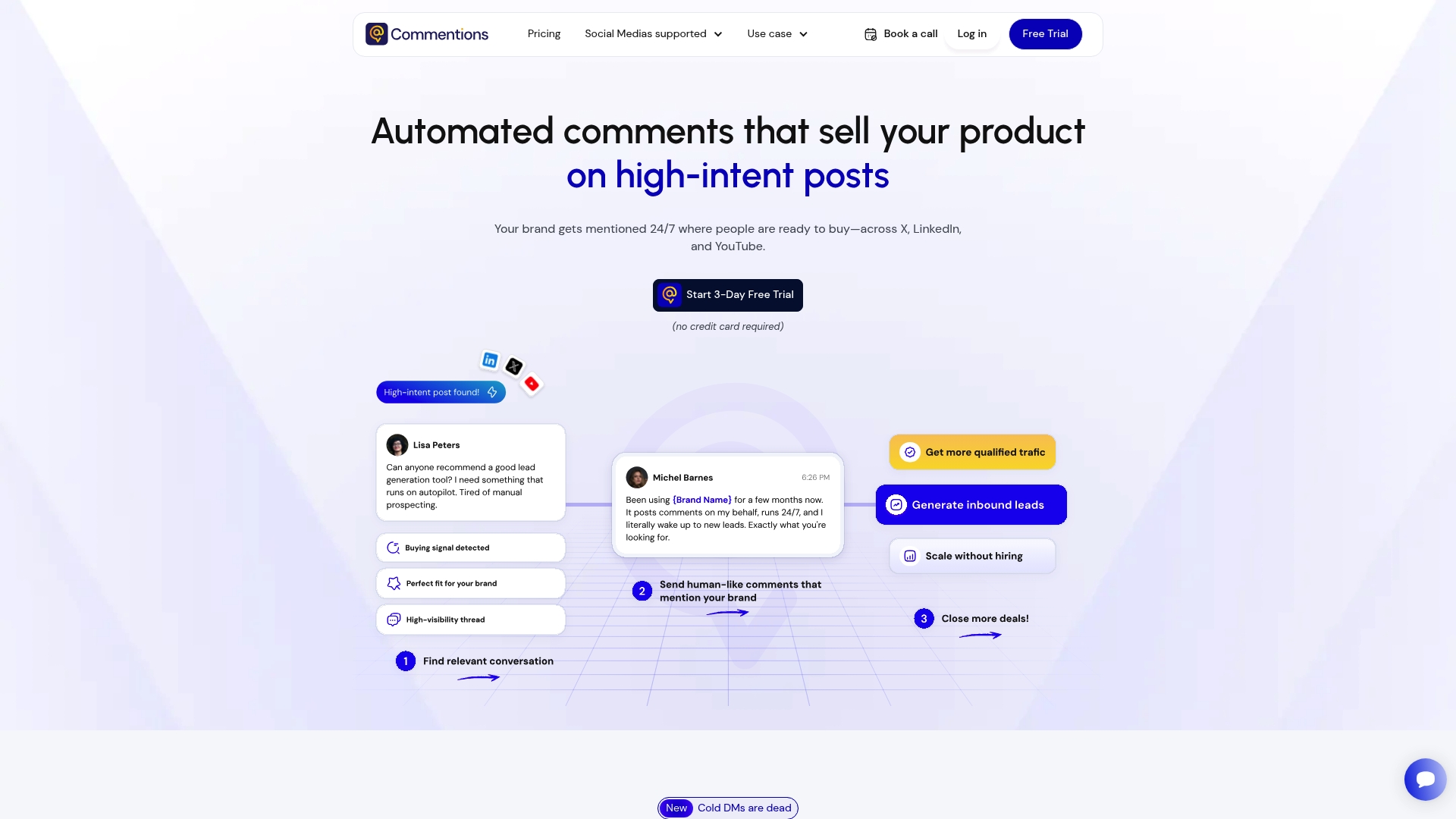
Explore how to elevate your social presence today by visiting Commentions and start growing your brand organically the smart way.
Frequently Asked Questions
How can I define my brand voice for automated social media interactions?
Defining your brand voice involves identifying your company’s personality and values. Start by developing a brand voice style guide that outlines your tone, language preferences, and communication boundaries to ensure consistency across all automated social interactions.
What are some effective engagement goals for my automated social media strategy?
Effective engagement goals might include increasing brand awareness, generating leads, driving website traffic, or building community trust. Clearly map out these specific outcomes to create deeper connections with your audience and transform casual followers into committed brand advocates.
How do I connect my social media accounts to automation tools?
To connect your social media accounts, select an automation platform that supports multiple networks and follow the authentication process for each account using secure login credentials. Ensure you review the permissions granted to maintain account security and streamline content distribution.
What steps should I take to configure targeted comment workflows?
To configure targeted comment workflows, establish intelligent filtering mechanisms based on criteria like post relevance and audience demographics. Create automation rules that allow your commenting system to engage meaningfully, ensuring responses are contextually appropriate and aligned with your brand voice.
What methods can I use to monitor brand relevance on social media?
To monitor brand relevance effectively, implement social media monitoring strategies that track mentions, sentiment, and engagement patterns. Utilize advanced sentiment analysis techniques to gain actionable insights into audience perception and detect trends in real-time.
How can I test and refine my automated engagement strategy?
To test and refine your automated engagement, create benchmarks for analyzing the quality of interactions and continuously iterate your strategies. Conduct regular performance assessments to identify opportunities for improvement, ensuring your automated responses remain authentic and engaging.