Quick Summary
1. Automated Commenting for Targeted Brand Mentions
AI has transformed how brands engage online by enabling strategic, contextually relevant commenting across social platforms. Automated commenting strategies represent a sophisticated approach to increasing brand visibility without appearing overtly commercial.
The core principle behind automated commenting involves using advanced algorithms to analyze social media conversations and generate intelligent, contextually appropriate responses. These AI systems can detect high engagement posts related to your industry and craft comments that naturally mention your brand while providing genuine value to the existing discussion.
Successful implementation requires understanding platform dynamics and audience expectations. AI tools now analyze sentiment, conversation context, and user interactions to generate comments that feel authentic rather than robotic. By detecting nuanced communication patterns, these systems can insert brand mentions seamlessly into relevant discussions.
Targeted brand mentions work best when they solve problems, share insights, or contribute meaningful perspectives. For instance, an AI system might recognize a technical discussion in your industry and generate a comment that subtly references your brand’s expertise while genuinely addressing the conversation’s core theme.
The key is maintaining a delicate balance between visibility and authenticity. Research indicates that overly aggressive or generic comments can actually diminish brand credibility, making sophisticated AI algorithms crucial for success.
Pro tip: Configure your AI commenting tool with specific guidelines that prioritize value creation over direct promotion, ensuring each comment feels like a genuine human contribution to the conversation.
2. Social Listening to Identify High-Engagement Posts
Social listening has transformed from basic brand monitoring into a sophisticated intelligence gathering strategy powered by artificial intelligence. Advanced AI technologies now enable marketers to detect nuanced conversation patterns and emerging trends across digital platforms.
The core mechanism of social listening involves using machine learning algorithms to analyze massive volumes of online conversations. These intelligent systems can quickly process social media posts, comments, and interactions to identify which content generates the most audience engagement. By understanding what topics resonate with your target audience, you can strategically align your marketing efforts.
Marketers can leverage social listening to uncover critical insights about audience preferences. These tools do more than track mentions they decode sentiment, recognize emerging trends, and predict potential viral content before it gains widespread attention. Real-time data analysis allows businesses to adapt their content strategy dynamically.
Successful social listening requires selecting the right platforms and understanding context. Different social networks have unique communication styles platforms like YouTube, Twitter, and Quora each demand specialized tracking approaches. Marketers must configure their AI tools to recognize platform specific engagement signals and communication nuances.
The ultimate goal of social listening is transforming raw data into actionable marketing strategies. By identifying high engagement posts early, brands can create content that mirrors audience interests, respond to emerging conversations, and position themselves as industry thought leaders.
Pro tip: Configure your social listening tools with specific industry keywords and sentiment filters to ensure you capture the most relevant and meaningful conversation signals.
3. Personalized Content Recommendations on Social Media
Personalized content recommendations represent a revolutionary approach to digital marketing, where artificial intelligence transforms user experiences through intelligent content curation. Machine learning algorithms now enable unprecedented levels of content personalization across social media platforms.
The core mechanism behind personalized recommendations involves analyzing individual user behaviors, interactions, and preferences in real time. By tracking metrics like engagement time, click through rates, and content types users interact with most frequently, AI systems build comprehensive user profiles that predict future content interests with remarkable accuracy.
Advanced recommendation systems go beyond simple demographic targeting. These intelligent platforms understand nuanced user interests by examining subtle behavioral patterns such as time spent on specific posts, types of content shared, and even emotional responses to different media formats.
Marketers can leverage these AI driven recommendations to create more engaging and relevant content experiences. By understanding individual user preferences, brands can craft highly targeted content that feels personally curated rather than generically distributed. This approach transforms social media from a broadcast medium into a personalized communication channel.
Implementing personalized recommendations requires sophisticated data collection and analysis strategies. Successful marketers must balance technological capabilities with user privacy considerations, ensuring transparency about how user data informs content suggestions.
Pro tip: Configure your AI recommendation systems with granular preference settings and regularly update user profile parameters to maintain accuracy and relevance.
4. AI-Powered Sentiment Analysis for Community Growth
AI-powered sentiment analysis represents a breakthrough technology transforming how businesses understand and engage with online communities. Deep learning methodologies now enable unprecedented insights into digital conversations and emotional landscapes.
Sentiment analysis goes far beyond simple positive or negative categorizations. Advanced AI algorithms can detect nuanced emotional states complex feelings and contextual subtleties within user generated content. These systems analyze text tone linguistic patterns and implicit communication signals to provide a comprehensive understanding of audience perceptions.
Competitive research techniques demonstrate how sentiment analysis can transform community engagement strategies. By interpreting emotional undertones in social media comments forums and reviews businesses can develop more empathetic responsive communication approaches.
Marketers can leverage sentiment analysis to identify emerging trends detect potential community challenges and proactively address user concerns. Machine learning models continuously improve their emotional intelligence by processing larger datasets enabling more accurate real time insights into community dynamics.
Successful implementation requires sophisticated AI tools capable of understanding context cultural nuances and rapidly changing communication styles. Businesses must invest in advanced natural language processing technologies that can interpret emotional signals across diverse communication platforms.
Pro tip: Configure your sentiment analysis tools with industry specific language models to improve accuracy and ensure more precise emotional interpretation of community interactions.
5. Workflows for Defining Authentic Brand Voice
Defining an authentic brand voice requires more than generic marketing guidelines. AI-powered content analysis now enables businesses to systematically document and maintain a consistent communication style across all platforms.
Modern brand voice workflows leverage artificial intelligence to analyze existing content and extract nuanced communication patterns. These intelligent systems can evaluate writing style word choice emotional tone and communication rhythms that define a unique organizational personality.
The process begins by training AI models on your most representative content samples. By processing existing communications marketing materials customer interactions and published work the system develops a comprehensive understanding of your current brand communication style.
AI tools can help identify specific linguistic markers that make your brand voice unique. These might include preferred sentence structures characteristic vocabulary emotional undertones and communication rhythms that differentiate your brand from competitors. The goal is creating a replicable framework that multiple content creators can follow.
Successful implementation requires ongoing calibration and refinement. As your brand evolves the AI system should continuously learn and adapt ensuring your voice remains authentic while staying responsive to changing audience expectations.
Pro tip: Create a comprehensive content style guide that includes both quantitative language metrics and qualitative brand personality descriptions to help AI systems more accurately capture your unique communication essence.
6. Real-Time Engagement Tracking and Lead Generation
Real-time engagement tracking represents a revolutionary approach to digital marketing that transforms how businesses identify and nurture potential customers. Generative AI technologies now enable instant analysis of customer interactions across multiple digital platforms.
The core mechanism involves using advanced machine learning algorithms to monitor user behaviors instantaneously. These intelligent systems track metrics such as click rates scroll depth interaction duration and content preferences to create dynamic user profiles that update in real time.
Predictive analytics approaches allow marketers to move beyond traditional lead generation strategies. By analyzing complex interaction patterns these AI systems can predict potential customer interest with remarkable accuracy identifying high potential leads before they even complete a traditional conversion action.
Successful implementation requires integrating multiple data sources and creating sophisticated tracking mechanisms. Marketers must develop comprehensive dashboards that aggregate data from social media platforms websites email interactions and other digital touchpoints to create a holistic view of potential customer journeys.
The most effective real-time engagement tracking systems go beyond simple data collection. They provide actionable insights that allow businesses to personalize communication strategies dynamically adapting messaging and content to match individual user behaviors and preferences.
Pro tip: Configure your AI engagement tracking tools with granular segmentation parameters and set up automated trigger workflows that respond to specific user interaction signals.
7. Adaptive Tone and Context Settings for Natural Interactions
Conversational AI technologies now enable marketing interactions that adapt dynamically to individual user contexts and emotional states.
Adaptive tone technology represents a significant leap beyond traditional communication strategies. By utilizing advanced natural language processing and machine learning algorithms these systems can instantaneously analyze conversation nuances including emotional undertones communication style and contextual background.
Sentiment analysis techniques allow AI to detect subtle shifts in user emotions and adjust communication strategies accordingly. This means marketing messages can be tailored not just to demographic data but to the specific emotional state and communication preferences of individual users.
Successful implementation requires developing comprehensive communication frameworks that include multiple tone variations linguistic flexibility and contextual understanding. Marketers must train AI systems to recognize complex communication signals including sarcasm emotional subtext and cultural communication nuances.
The goal of adaptive tone technology is creating interactions that feel genuinely human rather than mechanically generated. By understanding context emotional state and communication preferences AI can craft responses that resonate authentically with individual users across different platforms and interaction types.
Pro tip: Develop a detailed communication persona matrix with specific tone guidelines for different user segments and interaction scenarios to help your AI system navigate complex communication landscapes.
Below is a comprehensive table summarizing the key points and strategies discussed in the article regarding the application of artificial intelligence (AI) in modern marketing techniques.
This table outlines the innovative methods AI offers to enhance marketing efficiency and user engagement across multiple platforms.
Unlock Authentic Organic Engagement with AI-Powered Commenting
The challenge of maintaining genuine brand visibility while engaging meaningfully on platforms like X, LinkedIn, and YouTube is clear in “7 Examples of AI Marketing for Organic Engagement.” Brands and creators often struggle to balance targeted brand mentions with authenticity, avoid robotic outreach, and keep pace with real-time conversations. You want your comments to feel natural, provide value, and resonate emotionally without coming across as pushy or generic.
This is where Commentions.com offers a powerful solution. Our AI-driven marketing platform automatically detects high-engagement posts and inserts carefully crafted brand mentions designed to build trust, increase visibility, and generate meaningful leads 24/7. By allowing you to define your unique brand context, tone, and workflows, Commentions ensures every comment feels human-like and aligned with your marketing goals. Experience AI that understands nuanced communication patterns and adapts dynamically — helping you connect authentically with your audience.
Ready to elevate your organic growth with AI that truly listens and responds?
Explore how automated, context-sensitive commenting can transform your brand engagement.
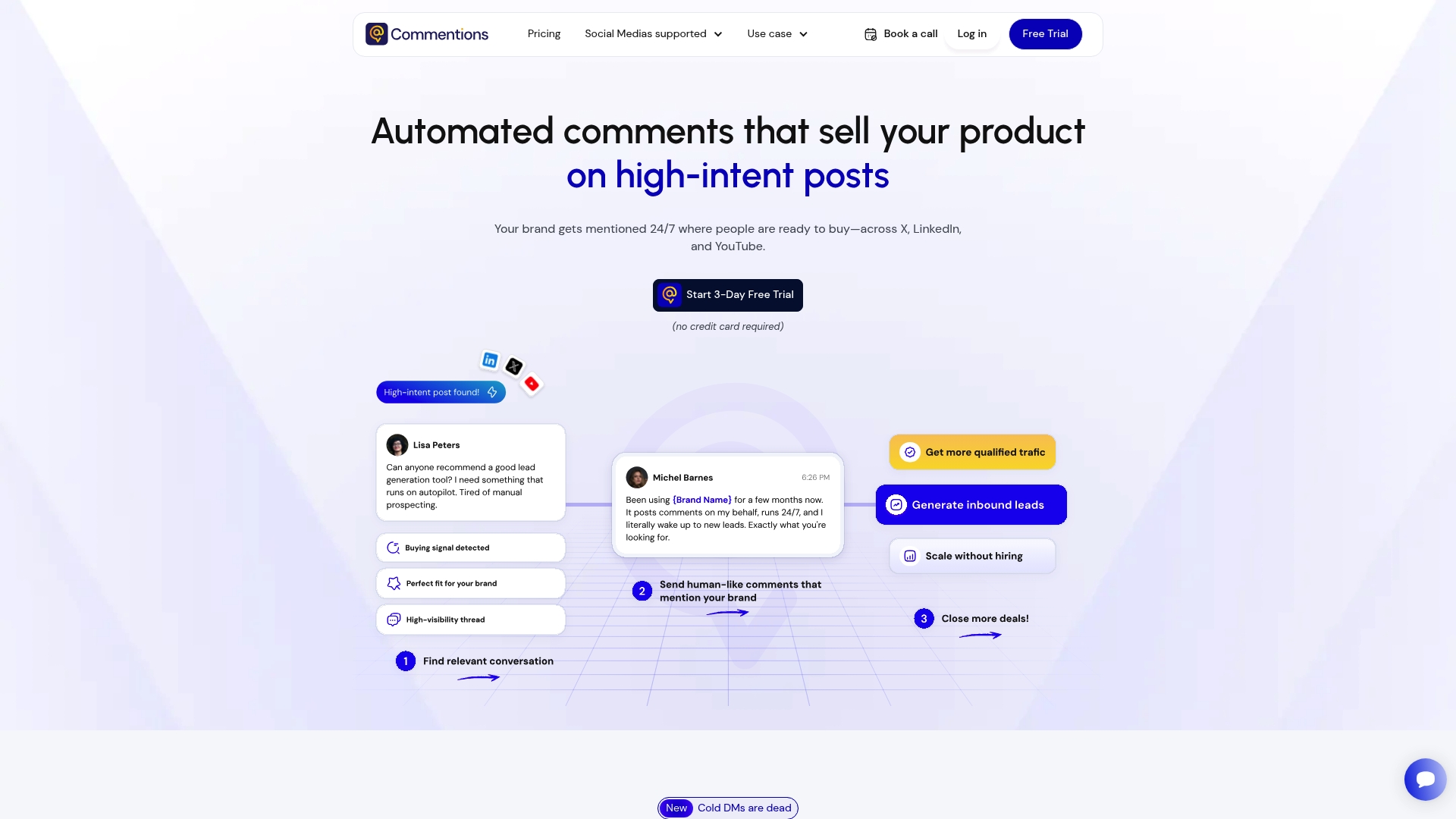
Experience the future of authentic social marketing today at Commentions. Start driving targeted traffic and genuine conversations that grow your brand effortlessly now.
Frequently Asked Questions
What is automated commenting in AI marketing?
Automated commenting is a strategy that uses AI to generate contextually relevant comments on social media posts. Implement this by configuring your AI tool to analyze discussions in your industry and create engaging comments that naturally mention your brand.
How can social listening improve my brand’s engagement?
Social listening involves using AI to analyze online conversations and identify high-engagement topics relevant to your audience. Start by setting up AI tools to track keywords and sentiments related to your brand, allowing you to adapt your content strategy dynamically.
What do personalized content recommendations involve?
Personalized content recommendations use AI to curate and suggest content based on individual user behaviors and preferences. Implement personalized recommendations by analyzing user interaction metrics to build accurate user profiles that inform targeted content strategies.
How does AI-powered sentiment analysis help in community management?
AI-powered sentiment analysis helps understand the emotions behind user-generated content, allowing businesses to respond empathetically. To leverage this, configure your sentiment analysis tools to recognize emotional tones in online discussions, enabling timely and relevant engagement with your community.
What steps can I take to define my brand’s authentic voice using AI?
To define your brand’s authentic voice, use AI tools to analyze your existing communications for unique patterns in style and tone. Begin by training your AI model on representative samples of your content, ensuring it captures the essence of your brand’s personality clearly across all platforms.