Over 40 percent of American brands say authentic online comments boost their audience engagement. In a crowded digital space, genuine conversation can turn casual scrollers into devoted followers. Understanding exactly how to shape your brand’s tone and comment objectives will help you stand out and connect in ways that automated replies rarely achieve.
Table of Contents
- Step 1: Define Brand Tone And Comment Objectives
- Step 2: Research Audience And Platform Trends
- Step 3: Craft Relevant, Authentic Comment Templates
- Step 4: Automate Contextual Comment Posting
- Step 5: Monitor Comment Engagement And Refine Strategies
Quick Summary
Key PointExplanation1. Define brand tone carefullyEstablish a clear tone that reflects your brand’s personality and aligns with marketing goals for effective communication.2. Research audience preferencesUnderstand your target audience’s communication styles and platform trends to craft relevant and engaging comments.3. Create adaptable comment templatesDevelop templates that allow for personalization, ensuring comments feel genuine while maintaining brand voice.4. Automate with careUse contextual comment automation tools wisely, ensuring a balance of automated and manually crafted interactions to preserve authenticity.5. Continuously monitor and refineRegularly analyze engagement metrics to understand performance and adjust commenting strategies for greater impact.
Step 1: Define brand tone and comment objectives
Defining your brand’s tone and comment objectives creates a strategic roadmap for authentic social engagement. By establishing clear communication guidelines, you ensure every comment reflects your brand’s personality and marketing goals.
Start by understanding your brand’s core mission and audience expectations. Strategic brand tone creation involves selecting word choices, emotional undertones, and communication style that genuinely represent your organization. Consider how your brand wants to be perceived: professional and authoritative, friendly and approachable, technical and precise, or conversational and witty. Each comment should feel like a natural extension of your brand’s core personality.
To develop precise comment objectives, map out specific outcomes you want to achieve. Are you aiming to build industry credibility, spark conversations, demonstrate thought leadership, or generate targeted leads? Your objectives will guide the tone, length, and substance of your comments. For instance, a technical software company might use precise, informed language, while a creative agency could adopt a more playful, innovative communication style.
Here’s a summary of brand tone options and their typical business impact:
Brand Tone TypeTypical LanguageExpected Business ImpactProfessional & AuthoritativeFormal, expert vocabularyBuilds trust and credibilityFriendly & ApproachableWarm, inviting styleIncreases audience engagementTechnical & PreciseDetailed, jargon-focusedAttracts industry specialistsConversational & WittyCasual, playful phrasesDrives social sharing and virality
Pro tip: Create a one-page brand communication guide that details your preferred tone, key messaging themes, and comment engagement rules to maintain consistency across all interactions.
Step 2: Research audience and platform trends
Understanding your target audience and the evolving social media landscape is crucial for crafting impactful comments that resonate and drive engagement. This research phase helps you identify where your audience congregates and how they prefer to communicate.
Start by analyzing platform demographics and communication styles. Social media research reveals significant shifts in user preferences across different networks. Some platforms like X and Facebook are experiencing declining trust, while LinkedIn, Instagram, and YouTube are gaining popularity for professional and creative interactions. Each platform has unique communication norms and audience expectations. For instance, LinkedIn demands a more professional tone, while Instagram allows for more visual and conversational approaches.

Dig deeper by examining real-time analytics, audience engagement patterns, and trending topics within your specific industry. Look beyond surface-level metrics to understand the nuanced communication styles that generate meaningful interactions. Consider factors like average comment length, preferred content types, peak engagement times, and the emotional tone that resonates with your target demographic.
Pro tip: Use platform-specific social listening tools to track audience sentiment, emerging trends, and conversation dynamics in real time, allowing you to continuously refine your commenting strategy.
Step 3: Craft relevant, authentic comment templates
Developing strategic comment templates enables you to streamline your social engagement while maintaining genuine, personalized interactions. These templates serve as flexible frameworks that capture your brand’s unique voice and communication style.
Comment template strategies provide a structured approach to creating meaningful digital conversations. Start by developing 3 to 5 core template variations that align with different interaction scenarios research insights suggest templates should balance consistency with customization. Each template should include placeholders for specific details that allow real-time personalization. For professional platforms like LinkedIn, craft a more formal template with industry specific language. On more casual platforms like Instagram, develop conversational templates that sound more spontaneous and friendly.
Ensure your templates demonstrate authentic engagement by incorporating specific elements that show genuine interest. Include references to the original post, ask thoughtful follow-up questions, and provide unique perspectives that add value to the conversation. Avoid generic responses that sound automated or robotic. Instead, create templates with multiple adaptable sections that can be quickly customized based on the specific context of the post or discussion.
Pro tip: Create a flexible template library with 3-5 base templates for different platforms, keeping 20% of each template open for real-time personalization to maintain authenticity.
Step 4: Automate contextual comment posting
Contextual comment automation transforms your social media engagement strategy by enabling intelligent, timely, and relevant interactions across multiple platforms. This approach allows you to maintain a consistent online presence without sacrificing the authenticity of your brand communication.
Automated comment technologies leverage advanced AI and natural language processing to generate intelligent responses. Select an automation tool that supports sentiment analysis, context recognition, and platform specific communication styles. Configure the tool to analyze post content, understand underlying themes, and generate comments that feel genuine and contextually appropriate. Implement smart filtering mechanisms that prevent posting on inappropriate or sensitive content, ensuring your brand maintains professional standards.
Establish clear guidelines for your automation system by creating a comprehensive rulebook that defines acceptable comment parameters. Include specific instructions about tone, language complexity, topic relevance, and interaction boundaries. Regularly review and update your automation rules to adapt to changing platform dynamics and audience expectations. Set up monitoring systems that allow manual review and occasional intervention to maintain the highest quality of automated interactions.
Pro tip: Always maintain a 70 to 30 ratio of automated to manually crafted comments, reserving manual interaction for complex or highly nuanced conversations.
Step 5: Monitor comment engagement and refine strategies
Successful social media engagement requires continuous monitoring and strategic refinement of your commenting approach. By tracking performance metrics and analyzing audience responses, you can progressively improve your communication effectiveness.
Systematic engagement evaluation helps you understand the true impact of your social interactions. Track key performance indicators such as response rates, sentiment analysis, comment reach, and audience interaction depth. Utilize analytics tools that provide granular insights into how your comments perform across different platforms. Pay attention to metrics like view count, likes, replies, share frequency, and the overall tone of responses to your comments.
Compare key metrics to track when monitoring social media comment engagement:
MetricWhat It MeasuresUse for Strategy RefinementResponse RateReplies to your commentsIdentifies engagement qualitySentimentPositive vs. negative toneReveals audience attitudesComment ReachNumber of viewersAssesses overall visibilityInteraction DepthLength/quality of repliesFinds most effective topics

Develop a structured feedback loop that allows for rapid strategy adjustment. Create periodic review sessions where you analyze comment performance data and identify trends. Look for patterns in successful comments what language resonates most, which topics generate the most engagement, and which platforms yield the best results. Use these insights to continuously refine your comment templates, adjust your communication style, and optimize your overall social media interaction strategy.
Pro tip: Schedule monthly analytics review sessions and be prepared to pivot your commenting strategy based on data driven insights, maintaining flexibility in your approach.
Boost Your Brand Engagement with Authentic Commenting
The challenge of creating engaging comments naturally and consistently is clear. Many brands struggle to maintain a genuine tone while scaling their social media interactions across platforms like X, LinkedIn, and YouTube. This article highlights how defining your brand tone, crafting relevant templates, and automating contextual comments can transform your outreach. Yet manual efforts can be time-consuming and risk losing authenticity.
Commentions.com solves this pain point by using AI to automatically post relevant, human-like comments that fit your brand’s voice and objectives. Our platform detects high-engagement posts and inserts contextual brand mentions that increase visibility, drive targeted traffic, and generate leads around the clock. You stay in control by setting your brand context and workflows to keep every conversation genuine and aligned with your marketing goals.
Discover how you can amplify your social media presence without sacrificing authenticity by exploring Commentions AI-powered platform.
Looking to create meaningful impact with every comment while saving time and effort?
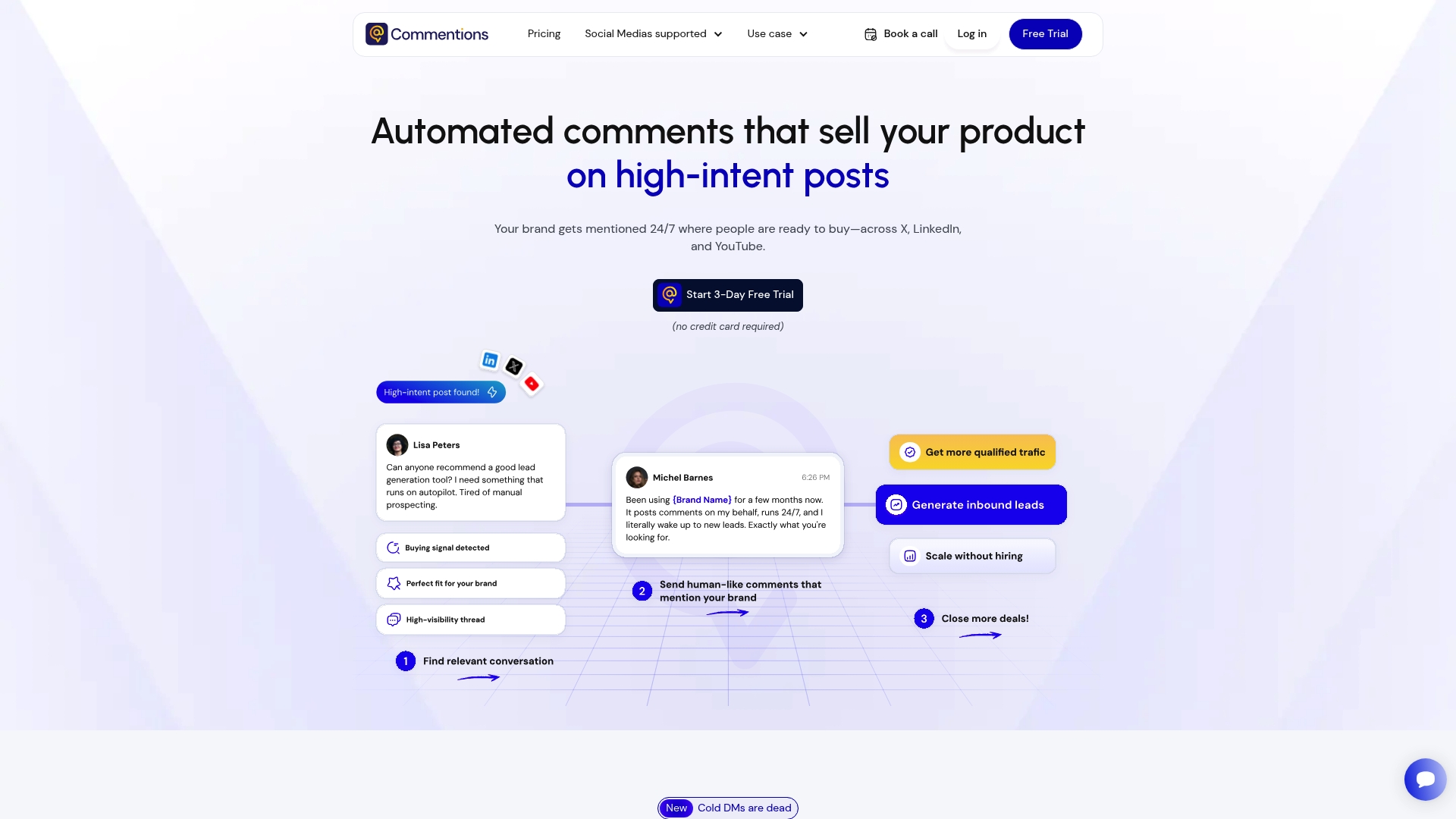
Visit https://commentions.com now to start automating smart, authentic engagement that grows your brand organically and drives continuous results.
Frequently Asked Questions
How can I define my brand’s tone for creating engaging comments?
Defining your brand’s tone is essential for crafting engaging comments. Start by identifying your brand’s core mission and what your audience expects, then choose a communication style that reflects your brand’s personality, whether it’s professional, friendly, technical, or witty.
What are some objectives I should consider when crafting comments?
Consider specific objectives like building credibility, sparking conversations, or demonstrating thought leadership. Clearly define what you want to achieve so that each comment aligns with your overarching goals, making your social engagement more targeted.
How do I research my audience and platform trends effectively?
To research your audience and platform trends, analyze the demographics and preferred communication styles on various social media platforms. Utilize real-time analytics to understand audience engagement patterns and trending topics to tailor your comments accordingly.
What should I include in my comment templates for authenticity?
Include elements like references to the original post, thoughtful follow-up questions, and unique perspectives in your comment templates. Ensure templates are adaptable, allowing for personalization by leaving placeholders for specific details relevant to each interaction.
How can I automate contextual comment posting without losing authenticity?
To automate contextual comment posting, choose an automation tool that supports sentiment analysis and context recognition. Set clear guidelines for the tool’s use, ensuring comments remain relevant and appropriate while maintaining a balance of 70% automated and 30% manually crafted interactions.
What metrics should I monitor to evaluate my comment engagement?
Monitor key metrics such as response rates, sentiment, comment reach, and interaction depth to evaluate your comment engagement. Analyze these metrics regularly to adjust your strategy effectively, aiming for continuous improvement in social media interactions.