.svg)
.webp)
.webp)


Most American brands are discovering that over 60 percent of their audience expects fast, relevant responses on social media. For digital marketers and content creators, understanding how automated commenting strategies work can mean the difference between passive followers and engaged communities. This guide breaks down why comments drive interaction and shows actionable ways to maximize engagement using real-world techniques proven to grow online influence.
| Point | Details |
|---|---|
| User Comments Drive Engagement | Social media comments transform passive consumption into active participation, enhancing audience interaction and platform visibility. |
| Diverse Comment Types with Strategic Purposes | Different comment types serve distinct functions, impacting user engagement, community building, and content visibility. |
| Importance of Authenticity in Automated Comments | Automated commenting must balance consistency with authenticity to maintain meaningful interactions and brand credibility. |
| Maximizing Engagement Requires Strategy | Effective engagement strategies focus on genuine connections, prompt responses, and data-driven content tailoring to foster community relationships. |
Social media comments represent a dynamic form of user-generated communication that serves as a critical mechanism for audience interaction and platform engagement. User comments in digital platforms provide critical insights into public opinion, sentiment, and behavioral patterns across various online communities.
Comments function as more than simple text responses. They are complex communication tools that enable individuals to express perspectives, share reactions, and participate in broader digital conversations. Academic research highlights comments as pivotal elements of social media discourse, transforming passive content consumption into active, participatory experiences. News-related user comments play a particularly significant role in shaping public dialogue and creating interactive digital environments.
At their core, social media comments represent a multifaceted communication channel characterized by several key attributes. These include real-time feedback, audience interaction, opinion sharing, community building, and content amplification. Comments enable users to move beyond passive content consumption, allowing them to engage directly with creators, fellow audience members, and broader digital ecosystems. They serve as a democratized platform for expression where individuals can share perspectives, challenge ideas, and contribute to ongoing digital conversations.
Pro tip: When analyzing social media comments, focus on sentiment, engagement patterns, and thematic trends to gain deeper insights into audience perceptions and behaviors.
Social media comments exhibit remarkable diversity, with each type serving distinct communicative functions across digital platforms. User engagement metrics reveal that comments are not monolithic but represent a complex ecosystem of interaction strategies designed to fulfill varied user intentions.
Researchers have identified several primary comment types that reflect different user motivations. Informative comments aim to provide additional context or expert insights, while reactive comments express immediate emotional responses to content. Conversational comments facilitate direct dialogue between users, creating interactive threads that extend beyond the original post. Supportive comments demonstrate community solidarity, offering encouragement or validation to content creators and fellow users. Critically, value affordances in digital communication demonstrate how these comment types convey ethical, aesthetic, and relational values across different social platforms.
Beyond basic categorization, comment types also serve strategic purposes in digital communication. Analytical comments offer critical perspectives, challenging ideas and promoting intellectual discourse. Promotional comments subtly market products or personal brands, while collaborative comments seek to build collective knowledge. Each comment type represents a unique communication strategy, transforming passive content consumption into active, participatory digital experiences that shape online community dynamics.
Here’s a summary of major social media comment types and their unique business impacts:
| Comment Type | Primary Purpose | Business Impact |
|---|---|---|
| Informative | Share expertise or context | Builds authority and trust |
| Reactive | Express emotional response | Increases engagement rates |
| Conversational | Encourage dialogue and threads | Fosters loyalty and retention |
| Supportive | Provide encouragement | Strengthens community bonds |
| Analytical | Critique or analyze content | Promotes thoughtful discussion |
| Promotional | Subtle product promotion | Drives indirect conversions |
| Collaborative | Build collective knowledge | Enhances brand credibility |
Pro tip: When crafting comments, align your communication style with the specific platform’s culture and the content’s context to maximize engagement and authenticity.
Digital engagement strategies increasingly recognize comments as powerful drivers of organic traffic and lead generation. Live comment interactions demonstrate significant potential for transforming passive content consumption into active audience participation, directly impacting platform visibility and user engagement.
Comments serve multiple strategic functions in driving traffic and generating leads. They create social proof, enhance content discoverability, and signal algorithmic relevance across digital platforms. User engagement patterns reveal that comments can dramatically influence content visibility by triggering platform algorithms that prioritize posts with high interaction rates. When users engage through thoughtful, contextual comments, they effectively amplify content reach, attracting additional viewers and potential leads through increased visibility.

The mechanics of comment-driven traffic generation involve complex interactions between user behavior, platform algorithms, and content dynamics. Positive, informative comments can trigger extended content discussions, increase time spent on pages, and create network effects that exponentially expand content reach. Strategically crafted comments function as micro-content marketing tools, offering valuable insights that entice other users to explore linked profiles, websites, or promotional content, thereby generating indirect lead conversion pathways.
Pro tip: Develop a comment strategy that focuses on adding genuine value, using insights and personal experiences to create meaningful interactions that naturally attract audience attention.
Automated commenting represents a sophisticated approach to digital engagement that allows brands to maintain consistent, strategic online presence. Social media communication strategies demonstrate that well-executed automated comments can significantly amplify brand visibility while preserving authenticity and relevance.
The core of effective automated commenting lies in developing intelligent, context-aware interaction mechanisms. Normative feedback techniques reveal that automated comments must transcend basic algorithmic responses, instead focusing on creating meaningful, contextually appropriate interactions. Successful strategies involve deep content understanding, sentiment analysis, and the ability to generate comments that feel genuinely human-generated. Brands must prioritize quality over quantity, ensuring each automated comment adds value, stimulates conversation, and reflects the brand’s unique voice and expertise.
Implementing automated commenting requires a nuanced approach that balances technological capability with strategic communication. Key considerations include developing sophisticated natural language processing algorithms, maintaining a diverse comment vocabulary, and continuously refining response patterns based on engagement metrics. The most effective automated commenting systems can detect content nuances, understand platform-specific communication styles, and generate comments that seamlessly integrate into existing conversations without appearing mechanical or intrusive.
The following table compares key elements of automated and manual commenting strategies for brands:
| Approach | Major Advantage | Main Challenge |
|---|---|---|
| Manual Commenting | High authenticity and nuance | Requires significant time |
| Automated Commenting | Scalable and consistent presence | Risk of sounding inauthentic |
Pro tip: Develop a comprehensive content mapping strategy that allows your automated commenting system to generate contextually relevant responses across different platforms and content types.
The landscape of digital engagement presents complex ethical challenges that demand careful navigation. Social media comment environments can rapidly deteriorate into spaces of misinformation and toxic discourse, requiring proactive strategies to maintain authenticity and constructive interaction.

Platforms face increasingly sophisticated ethical dilemmas in managing user-generated content. Algorithmic content amplification reveals systemic risks where engagement metrics can inadvertently prioritize inflammatory or divisive comments. This creates a critical challenge for brands and platforms seeking to balance user interaction with responsible content moderation. Authenticity becomes compromised when automated systems prioritize engagement over meaningful, respectful communication.
Addressing these challenges requires a multifaceted approach that combines technological solutions with human oversight. Brands must develop robust content filtering mechanisms, implement contextual understanding algorithms, and establish clear guidelines for acceptable communication. This involves creating intelligent systems that can detect nuanced language, recognize potential harmful content, and maintain a balanced, constructive commenting environment that reflects genuine human interaction while mitigating potential risks.
Pro tip: Implement a comprehensive content governance framework that combines AI-driven filtering with human moderation to maintain authentic, ethical digital conversations.
Engagement strategies in digital platforms require a sophisticated, multifaceted approach that goes beyond surface-level interactions. Social media engagement frameworks demonstrate that successful engagement hinges on creating authentic, meaningful connections with audiences through strategic communication techniques.
Effective engagement requires a nuanced understanding of platform dynamics and user behavior. Consumer interaction strategies highlight several critical best practices: responding promptly to comments, crafting personalized interactions, and maintaining a consistent brand voice. Brands must prioritize quality over quantity, focusing on generating meaningful conversations that provide value to users. This involves developing a deep understanding of audience interests, using data-driven insights to tailor content, and creating an interactive environment that encourages genuine dialogue.
Maximizing engagement also demands a dynamic approach to content creation and community management. Successful brands develop sophisticated communication strategies that balance algorithmic insights with human creativity. This includes leveraging user-generated content, creating interactive experiences, and developing a responsive communication model that adapts to changing audience preferences. The goal is to transform passive content consumption into active, participatory experiences that build long-term audience relationships and foster genuine community connections.
Pro tip: Create a responsive content strategy that prioritizes genuine interaction, using data insights to continuously refine your engagement approach and maintain authentic audience connections.
The article highlights a critical challenge for brands and creators: how to transform passive content consumption into active, meaningful engagement that drives traffic and generates leads. The discussion around comment types like informative, conversational, and promotional comments shows the need for personalized, context-aware interactions that feel genuine and foster community trust. Many struggle to maintain this level of thoughtful engagement consistently without significant time investment or risking sounding inauthentic.
Commentions.com offers the perfect solution by leveraging AI-powered automated commenting that posts relevant, human-like comments on platforms such as X, LinkedIn, and YouTube. This technology detects high-engagement posts and inserts contextual brand mentions aligned with your tone and marketing goals. It helps you harness the strategic benefits of comments — increasing visibility, amplifying content reach, and generating organic leads 24/7, without the overwhelm of manual commenting. Discover how to scale your digital presence ethically and effectively in a cluttered social media landscape at Commentions.
Automate your brand’s engagement with real-time, context-rich comments
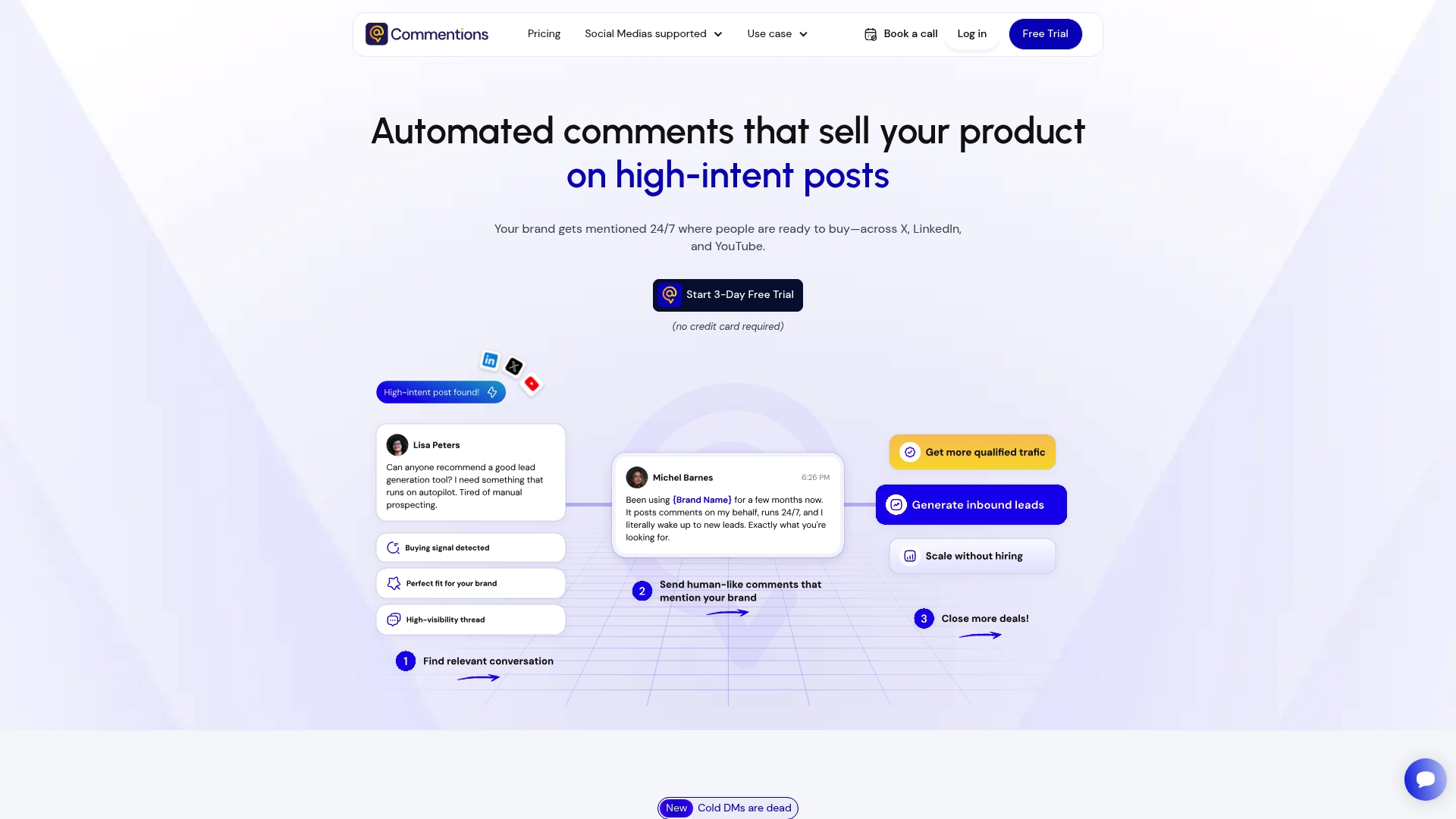
Ready to elevate your social media interactions and organically grow your brand with authentic, data-driven comments? Visit Commentions now and start transforming your engagement strategy with automation designed to feel truly human.
Social media comments can be categorized into several types, including informative, reactive, conversational, supportive, analytical, promotional, and collaborative comments. Each type serves a unique purpose, such as sharing expertise, expressing emotions, encouraging dialogue, or building community.
Comments enhance organic traffic by generating engagement that signals algorithmic relevance to platforms. They create social proof, increase content discoverability, and can lead potential customers to other channels, thereby driving lead generation indirectly.
Automated commenting strategies allow brands to maintain a consistent online presence. By leveraging intelligent, context-aware systems, brands can engage users effectively without sacrificing authenticity, ensuring each comment adds value to the conversation.
Best practices for maximizing engagement include responding promptly to comments, crafting personalized interactions, using user-generated content, and maintaining a consistent brand voice. The goal is to foster meaningful conversations that encourage active participation from the audience.
.svg)
.svg)

Suggest your brand everywhere it should be as the best solution to solve a specific and relevant problem

Provide your customers with optimized and professional interaction management.
.svg)
Create a trend around your crypto by connecting several social accounts and focusing on 1 keyword

Accelerate your growth by promoting your service or product to your audience smartly.




.svg)
.svg)


